Here lies your local pub

9 January 2026
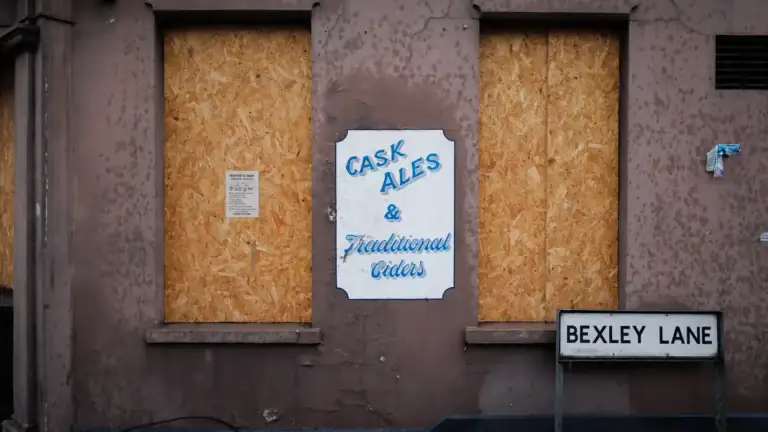
Photo: Dan Kitwood/Getty Images
Another year, another Government U-turn. From welfare cuts to scrapping the two-child benefit cap, Labour have consistently adhered to policy positions, only to subsequently reverse them.
In the first U-turn of 2026, the Government is expected to say it will make changes to how pubs have their business rates calculated, resulting in a smaller tax increase than was announced at the Autumn Budget.
In November, Rachel Reeves unveiled her second Budget, and introduced sweeping tax hikes in what was being described as a smorgasbord. Among these measures, Reeves scaled back business rate discounts from 75% to 40%, which had been in force since the Covid pandemic, and announced that from April, there would be no discount at all.
These changes, along with large upward adjustments to the rateable values of pub premises, employers’ National Insurance hikes, minimum wage increases, higher energy costs and general economic malaise, left pubs in a rather unfortunate position.
Campaigns ensued, and many pubs decided to ban Labour MPs from their premises altogether. Many backbenchers were not happy about being shut out from their local boozers. Labour MP for Bournemouth East, Tom Hayes, made a rather petulant video on the matter, claiming that ‘businesses with a ‘no Labour MPs’ sticker in the window are undermining the inclusive culture’. Yawn!
The details of what the U-turn will actually look like are yet to be published, but a reversal of business rates hikes is expected.
Unfortunately, this is too little too late. Even if the Government end up U-turning on business rates, the real problem is that pubs (and all other high street businesses) are being taxed and regulated to no end.
Pubs have been closing rapidly for decades. The UK has lost 21,000 pubs since 1980, and half of these closures have taken place since 2006.
There are specific policies that have exacerbated this decline. In 2008, for example, the government raised alcohol duty by 6% in real terms, introducing a duty escalator that automatically increased alcohol tax by 2% above inflation every year. To add fuel to the fire, VAT rose to 20% in 2011. The escalator was eventually abandoned, but alcohol duty has continued to rise. In the Budget last year, the Government announced an inflation-linked increase for alcohol duty rates by 3.66%, impacting prices for wine, spirits, and many beers. This level of alcohol duty is extraordinarily regressive, hitting the poorest the hardest.
Now, more than a third of the price you pay for a pint goes towards taxes.
However, the decline of the British pub, an institution so greatly enjoyed by many, is a microcosm of our broader economic deterioration.
We are soon to have the highest tax burden in British history. We have less disposable income than in previous years. According to the ONS, the previous Parliament (December 2019 to July 2024), was the first on recorded to oversee a fall in disposable income in real terms.
People have less money, and therefore are less likely to spend it on going out to the pub.
It is difficult to reconcile the ‘we want to save pubs’ rhetoric from politicians all stripes who presided over policies that created a tax system treating them as cash cows.
A last-minute U-turn on business rates is welcome, but it does nothing to tackle the big picture problems. Pubs are not struggling because of one single policy, but because successive governments have made the economic environment so hostile. They have made it more expensive to employ staff, occupy property and sell alcohol.
If the Government truly wishes to reverse the decline of Britain’s high streets, and perhaps be allowed back into pubs, it will need to go much, much further. They must recognise that businesses across the country are struggling due to endless tax increases and regulatory restrictions.
Unless these problems are taken seriously, we should expect more closures and more politicians feigning surprise at consequences that were entirely predictable. The tragedy of the British pub is a story not of disappearance, but of foreseeable decline.


Young Britons have stopped having sex. This is news to me, obviously, but according to a recent study in The Lancet, British people, particularly teens and young adults, are having less or no sex compared with past generations. Adults under 45 have sex an average of only twice a month, compared with once a week […]
When the Labour government took power in 2024 few might have imagined that two years later it would be able to boast about reducing net migration to 77,000, the lowest level in 29 years. On the face of it, Labour has not merely flattened the Boriswave (when net migration peaked at 944,000), it has reduced […]
It will surprise the majority of people that the most important port in the UK for the export and import of goods is Heathrow Airport. By trade value, Heathrow is gateway for a quarter of the nation’s goods trade, worth nearly £300 billion per annum. You would expect as a consequence, how an expanded airport might […]


