Labour have fallen – the Tories must now seize the day
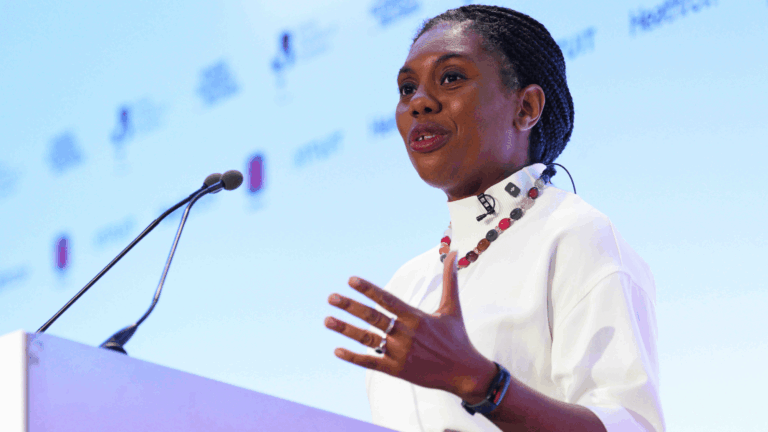
Photo: Carl Court/Getty Images
Back in 1997, John Major’s government had turned into a Calvary. The economy was recovering, but no one seemed to be listening. Black Wednesday, when Britain was forced out of the European Exchange Rate Mechanism (ERM), was a permanent cloud. In reality, leaving the ERM was good for the country, and there was no panic in the markets. Far from it: the government was able to cut interest rates. In retrospect, the reputation of Major’s time in office has grown. He is generally recognised as having been a decent prime minister.
But at the time, he could not get a hearing. This was partly due to his own parliamentary party, who were in a state of civil war over Europe. Once, John Major gave a despairing summary of his party’s mood. He said that whenever there was trouble, Tory MPs would form a circle, raise their rifles to their shoulders – and then turn round before opening fire. That guaranteed a military disaster, and a massive majority for Tony Blair.
This was despite the fact that Blair’s policies had received hardly any scrutiny. In some branches of psychiatry, the term ‘warm fuzzies’ is used to describe a comforting approach to distressed patients. It also summarised Labour’s programme. Blair himself was the warm fuzzy in chief.
For some years, this did not matter. Labour benefited from a favourable inheritance, and much of the public wanted Blair to succeed. Indeed, during the early months, his poll ratings went even higher, partly because voters who still distrusted Labour on tax were relieved when the new government kept its word and did not increase income tax rates.
Yet even those of us who were certain that the fuzzy’s meretriciousness would ultimately be exposed could find some consolation in the fact that the reckoning would be postponed. However unfairly, the Major government’s travails had led to a loss of faith in politics. If Tony Blair had suffered a similar fate, there could have been a haemorrhage in public confidence in Britain’s institutions. That did not happen – then.
Fast forward 27 years: there are parallels and also contrasts. No one could accuse Keir Starmer of being warm, and fuzzy does not sound right either. But his preparations for government were at least as vague as Tony Blair’s. Moreover, Sir Stumbler has none of the chief fuzzy’s knack of cheering people up. Equally, if he was prepared to acknowledge the favourable inheritance which Blair received, Keir Starmer could argue, fairly, that last year was very different.
However, when it comes to domestic policy, we are entitled to come to one conclusion about the new lot. They have an unrivalled capacity for making everything worse. This began as soon as they arrived in office. Principally because of the two five-letter words, Covid and Putin, the economy was still faltering. Labour did identify a crucial remedy: growth. They then did all they could to make that harder. First of all, they announced that the Tories had left a black hole: £22 billion. This was quickly rumbled. Two points became clear. First, the only hole was a grey one, in Rachel Reeves’ CV. Second, Labour were looking for an excuse to raise taxes and spend the money buying off the public sector trade unions.
Their tax-raising measures could not be faulted, on one assumption: that their aim was to sabotage the prospects of growth. Taxes on job creation in particular and entrepreneurs in general. Tax threats to farmers, tax increases on non-doms. It was a tax strategy only explicable as a deliberate attempt to transfer resources from the wealth-creating sectors of the economy to the subsidy-consuming ones.
There are two explanations for this. The first is class-hatred, as was shown in the tax on private schools. This will raise hardly any money, but that was not the point. Ministers wanted to inflict pain on parents who were already making financial sacrifices to help their children.
Then there is a paradox. Labour clearly dislike the rich. They also take them for granted. Starmer goes on about working people. He does not seem to realise that those who build up businesses, and also those who merely run them, are among the hardest-working people in Britain. He also assumes that their efforts will not be deterred when he increases their tax bill to pay for projects which they dislike – not to mention Angela Rayner’s anti-employment bill, designed to restore all the worst aspects of 1970s labour relations. She may even believe that this is going to encourage employers to take on more staff. More likely, she is happy to inflict more class war and devil take the consequences.
Labour do not seem to understand that highly successful people are also highly mobile. French labour laws and tax rates have turned prosperous parts of London into a Parisian arrondissement. Will the prosperous stay, and what of their English counterparts? Apropos the non-doms, George Osborne and Jeremy Hunt raised as much revenue as it was safe to do so. Indeed, some have argued that they went too far. The golden goose is a migratory bird. (Next thing we know, this Government will respond to that by saying: ‘geese. yes, let’s protect them by banning foie gras.’)
There is a result of all this farce, incompetence and malevolence. No government and no prime minister have ever fallen so far and so fast in public esteem. It is true that Starmer deserves some credit, for sucking up to Donald Trump, a necessary task and one which he cannot have enjoyed. But hardly any of those who approve of the closeness to Trump would ever dream of voting Labour. In the PM’s own party, it only adds to the disillusion. If you enjoy left-wing disillusion, it is worth reading The Guardian, which is suffused by it. It also seems that Labour is about to suffer from an outbreak of long Corbyn.
Disillusion: the dangers that were apparent in 1997 have now been magnified. Politics, politicians, all the machinery of government and democracy itself are coming close to vilification. This is bad. It is un-British and destabilising. There seems no likelihood that this Government will put that right, especially now that Rachel Reeves has wept her way into a far securer tenure than she deserves. There is still a mystery about those tears. The Tory whips were aware that she seemed distressed and alerted their Labour colleagues. An interesting response: whips as a breed have never been known for compassion or chivalry, and on that latter quality, it might be claimed that in the age of chivalry, Rachel Reeves would have been burnt as a witch. As it is, she seems likely to hang on long enough to break most of her tax pledges.
These are political circumstances designed to assist Nigel Farage. He does know how to spread jollification and a lot of voters would be ready to believe that he could not do any worse. The same might apply to Boris Johnson, especially to those who have forgotten about his record. Over to Kemi Badenoch. These are serious times, requiring a leader who is a patriot, a realist and someone who can make the British people feel good about themselves. Those who follow tennis assure one that Emma Raducanu – a delightful girl, by all accounts – has recovered her mojo. In the last couple of weeks, helped by Sir Stumbler’s bêtises, Kemi Badenoch appears to have found hers. There are signs that she is beginning to raise her game, on which more anon.

If you think this summer has been sticky, count yourself lucky you were not in the Cabinet in August and September 1931, in the midst of possibly the worst economic crisis the country has ever faced. It is worth looking at what happened then, because high energy and Government borrowing costs mean a crisis of […]

This week, Nimby Watch is on its way to Edgware – but it’s taking the long route… Ummm…where are we? Because I’m going to be honest, this doesn’t look too familiar… Well, for now, we’re in the West Bank, the larger of the two territories that make up Palestine – the other, of course, being […]

This week saw a south-Atlantic gale of outrage after Argentina’s chainsaw-wielding President Javier Milei repeated his country’s entirely bogus claim to the Falkland Islands, with President Donald Trump twisting the knife by saying the USA’s view of the issue was ‘under review’. It came just weeks after Argentina’s footballers brandished a ‘Malvinas’ banner at the […]