Zack Polanski’s economic illiteracy would doom us all
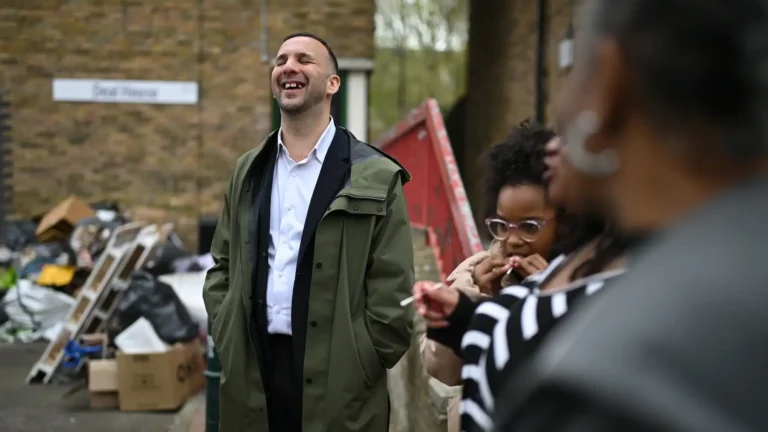
Photo: Leon Neal/Getty Images
The Green Party is proposing that CEO salaries should be capped at ten times the minimum pay within a company. Given the current leadership of the Greens, this is not surprising. But what is surprising is that, according to a YouGov poll 65% of Brits seem to agree – including 77% of Labour, 58% of Reform and even 54% of Conservative voters. Furthermore, this is not just young hotheads who will grow out of it. In fact, those aged 18-24 are less likely to agree than older people.
This is a proposal very far outside the usual parameters of political discussion. A government review headed by Will Hutton 15 years ago into public sector pay concluded that a ratio of 20 times minimum pay was too restrictive; no cap on private sector CEO pay was even considered.
There are some obvious objections, such as the likely rush to the exit of UK-registered companies and internationally-mobile executives. It would also require some mind-blowingly complicated legislation to block all possible loopholes. But there are some more subtle problems which people are unlikely to have thought through.
For one thing, bear in mind that this policy would be far more draconian than it appears at first glance. With full-time pay for a minimum wage worker of around £25,000, a company’s CEO might be paid no more than £250,000. This may still seem generous to left-inclined middle-class teachers, civil servants and health workers. But this is pre-tax. Given current rates of income tax, national insurance and student loan repayments, £250,000 becomes approximately £125,000 of spending power.
For another, consider that the top pay in a company also sets the structure for other tiers of management, administrators and ordinary employees. Limiting CEO pay would have as a corollary reducing pay at the next level, and below that all the way down the pay hierarchy. Otherwise there would be no incentive to take promotion to higher-tier jobs, with the increased responsibility, worry and job insecurity. If this was followed to its logical conclusion, even skilled and experienced workers might end up on pay which was little more than the minimum wage.
So in practice, there would have to be work-arounds, as there were long ago when incomes policies were in vogue. Companies would find ingenious ways of giving top managers and other employees benefits which don’t count as taxable income, diverting staff time and resources in the process. HMRC would have to employ yet more people to discourage this, of course.
Restrictions on the income of those working in conventional businesses would likely over time also lead to confiscatory levels of tax being imposed on those who earn high incomes in unconventional ways – such as top footballers, actors and musicians. We saw the consequences in the 1970s of such a tax regime, with many moving abroad. The Premier League would become a shadow of its former self.
There would almost certainly be a collapse in house prices, reducing the value of the chief asset of 65% of all households and plunging many, maybe most, into negative equity. While cheaper houses may seem a longer-run benefit, there would still be the same number of dwellings for the same number of people – and the position would gradually worsen over time as the amount people could now afford to pay would not justify significant new house building.
With markedly reduced upper earnings, saving to start your own business would become well-nigh impossible. And private donations to charities would become insignificant. No more privately-funded new buildings for national institutions. Independent initiatives of all kinds would be discouraged. The state would have to expand its reach still further, with all economic and cultural activity increasingly in its hands – and taxation rising to match.
I don’t believe that all those apparently assenting to the Greens’ proposal would really want the sort of economy and society which would result. Nor do I believe that the policy would ever be carried out in its pristine form. But it is only too easy to imagine that a watered-down version might be brought forward by a left Labour-Green-Lib Dem coalition after the next general election.
At the least this poll gives yet another depressing boost to those who believe reducing inequality should be the be-all and end-all of public policy, whatever the consequences.

The OBR’s latest Fiscal Risks and Sustainability report, published this week, gives a blunt assessment of the UK’s public finances: we can’t go on like this. If nothing changes, government debt will rise to an unsustainable 300% of GDP in 50 years’ time. How did things get so bad? Well, there’s one big demographic challenge […]

Here it comes again. Whoever Andy Burnham chooses to be his Chancellor of the Exchequer will face the same challenge as all their predecessors since Gordon Brown: producing ‘fiscal rules’ to reassure the City they will be prudent holders of the nation’s credit card. With Britain’s national debt higher than it’s been for decades, and […]

‘It is time for Whitehall to accept that growth cannot be ordered from the top down,’ Andy Burnham said in his first major speech since returning to Parliament. ‘Instead, it can only be nurtured from the bottom up.’ He is right. The man about to enter Downing Street has seen what much of his party […]