What Sinn Féin refuses to accept about the Troubles
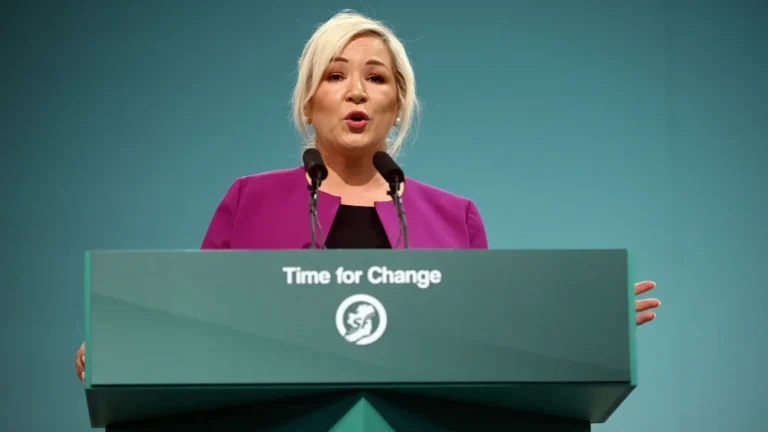
Michelle O'Neill is First Minister of Northern Ireland. Photo: Charles McQuillan/Getty Images
The Northern Ireland Troubles Bill is the Labour Government’s attempt to deal with the long history of violence in the province, which began in the late 1960s in response to the campaign for civil rights by members of the then-minority Roman Catholic and Nationalist population. Most Westminster politicians regard Northern Ireland as an invariable source of frustration and a no-win scenario, and responsibility for it as a hardship posting.
Within Northern Ireland’s fissiparous political establishment, differences of degree between parties on the same side can be even more bitter and long-standing than the central faultline of constitutional status and national identity. The Government therefore deserves at least an ironic tip of the hat for introducing proposed legislation which has been roundly condemned from several different sides. This weekend, it was the First Minister of Northern Ireland, Sinn Féin’s Michelle O’Neill, who decided to pass the time by sniping at Whitehall.
Briefly – without going back to the official Plantation of Ulster from 1609 or the Anglo-Norman intervention in Ireland in 1169-70 – the Northern Ireland Troubles Bill is a replacement for the Northern Ireland Troubles (Legacy and Reconciliation) Act 2023 introduced by the previous Conservative government. It is intended to create a ‘fair and transparent system that enables families of victims, including those who never came home from service in Northern Ireland, to seek answers’ through a Legacy Commission with investigative powers.
The difficulty it faces is trying to make that ‘fair and transparent system’ acceptable to both sides of the conflict, when the very acceptability to one side is often a sign of intolerable bias to the other. The First Minister has criticised the legislation for what she and many Republicans regard as inherent partiality.
What we’re seeing play out in Westminster is preferential treatment for British state forces, and avenues being closed down for families who want access to truth and justice or access to the courts… the British government saying to them, you’re not good enough to get information at the same while elevating and trying to give preferential treatment for British veterans.
Her intervention is relatively late to the party. The bill was first debated in the House of Commons last November, and given a Second Reading by 320 votes to 105. The Conservative Party had tabled a reasoned amendment – a formal explanation of why the bill should not be passed – because it abolished the scheme of limited immunity for former members of the Armed Forces and security services the 2023 Act had created. The Opposition argued that this would ‘lead to veterans once again being dragged before the courts facing potential prosecution for incidents that happened decades ago, while former paramilitaries are largely untouched’.
In essence, then, the opposition has condemned the bill because it does not offer sufficiently robust legal protection to veterans of the armed forces who served in Northern Ireland as part of Operation Banner, the 38-year deployment (1969-2007) which was the longest in the British Army’s history. Sinn Féin, by contrast, refuses to support the bill because the protections afforded to veterans are too generous and sweeping. This, according to O’Neill, will not allow Northern Ireland ‘to heal and actually to move forward’.
The Conservative critique has some force to it. On the one hand, the Armed Forces should never have carte blanche in terms of what happens on operational deployment, either within the UK or elsewhere. At the same time, the framework within which we insist they should operate must take account of the nature of their duties, the fact that they are often required, on behalf of the state, to make split-second judgements under extreme pressure. The consequences of these judgements, even if made on a reasonable basis given the circumstances, can be fatal, but that is the context in which we require service personnel to operate and we must be aware of it.
The insidious part of this is that the First Minster’s apparently inclusive spirit of equality before the law is part of a wider and decades-old Republican narrative to portray all sides of the conflict as morally equivalent. And that is not the case.
The fact that undoubtedly over the years some Armed Forces personnel have committed criminal acts and employed grotesquely excessive levels of force does not mean they can never legitimately resort to extreme force. Fundamentally, the British Army was deployed to Northern Ireland to assist the legitimate law and public order functions of the state. Soldiers were acting with legitimate authority to keep the peace and protect the lives of the civilian population.
Terrorists, however, whether Republican or Loyalist, were acting outside of the law of the land and actively seeking civilian deaths in furtherance of their ideological agenda. Emma Little-Pengelly, the Democratic Unionist Deputy First Minister, pointed out that ‘90% of the atrocities of the murders carried out were carried out by terrorist organisations’. She condemned any attempt ‘to rewrite history by having a lot of the focus in relation to the state, should that be police, or should that be the Army and others in Northern Ireland’.
It is hard to balance the need for justice against the fact that one side in the conflict, the security forces, was acting in a broadly legitimate way while the other, the various paramilitary and terrorist groups, was prepared to murder and maim. The First Minister is not an impartial observer: she has openly honoured terrorists, said there was ‘no alternative’ to the Provisional IRA’s terrorism and even broke lockdown regulations during the Covid-19 pandemic to attend the funeral of a senior PIRA terrorist.
The Government has got this legislation wrong and should pause to review it. But that should not be in any way a conciliation to O’Neill’s opposition. She is not an unbiased judge in these matters.


The ‘Burnham effect’ that propelled Labour to victory in Makerfield is only the latest example of regional and devolved democratic leaders who are miles more popular than their opposite numbers in Westminster. Political talents as diverse as Boris Johnson and Alex Salmond prospered after being sprinkled with devolved political fairy dust. So do these roles […]
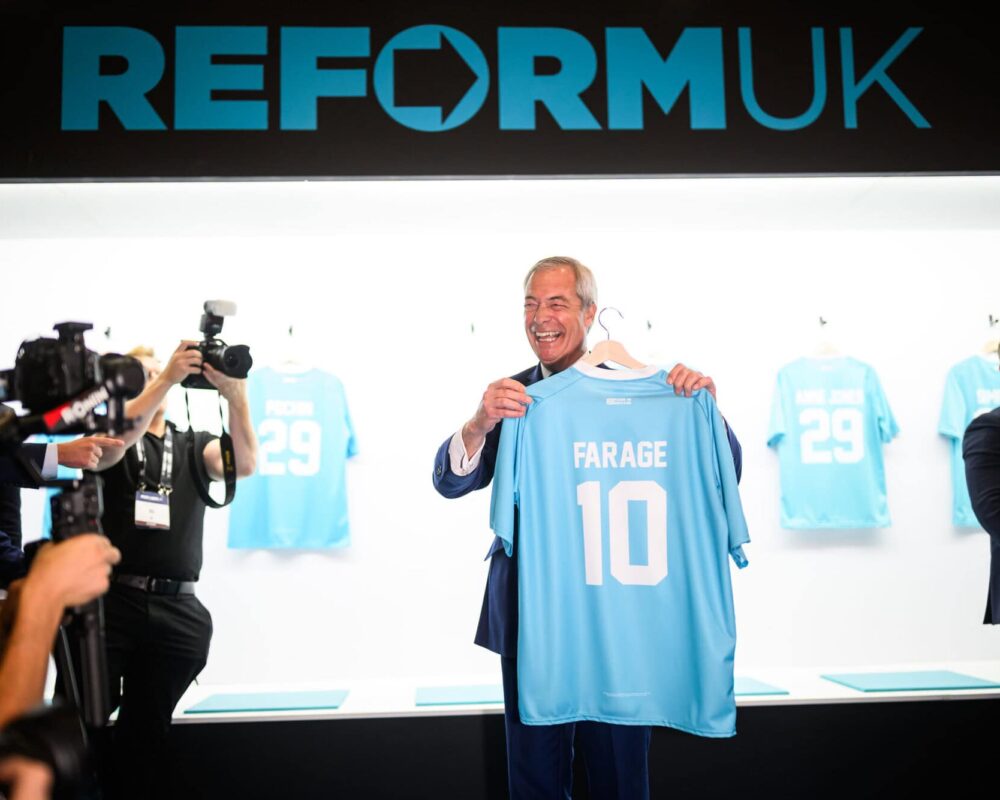
Last week, Nigel Farage claimed that, if he became prime minister, his government would deport up to 600,000 illegal immigrants. The announcement dominated the week’s news, panicked Labour and the Tories and strengthened Reform UK’s status as the party to beat at the next general election. From that point of view, it was another resounding […]
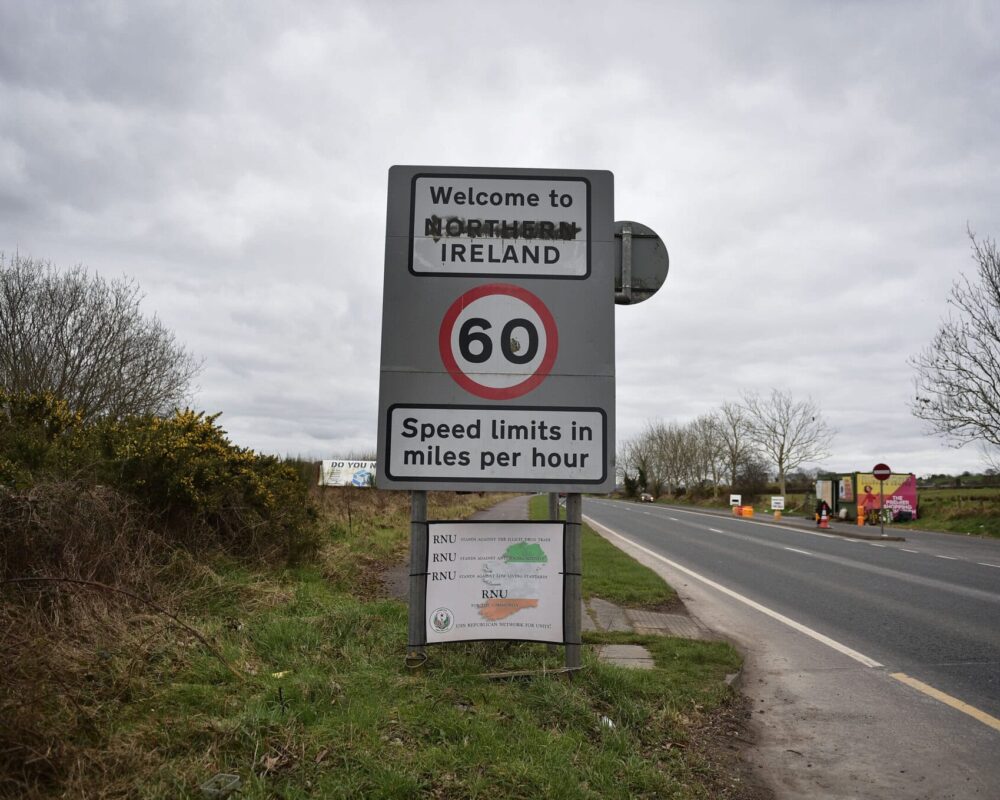
In May, Keir Starmer claimed that his Government’s latest deal with Brussels would ‘reset’ the UK’s relationship with the EU. The Prime Minister said that, among other gains, the Irish Sea border between Great Britain and Northern Ireland would soon soften, thanks to an impending Sanitary and Phytosanitary agreement on food and animal products. Unfortunately, […]