The Price Mechanism: Who will come to our rescue?

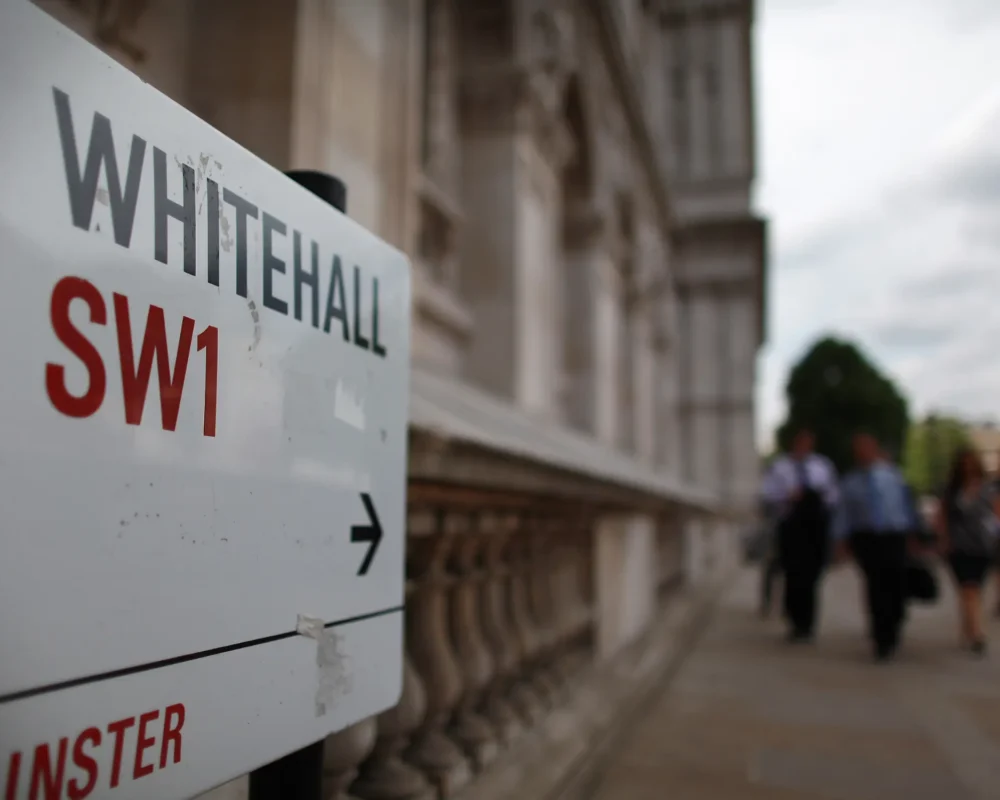
Photo: Leon Neal/Getty Images
By the 1970s, a few generations of the brightest minds in Britain had been utterly flummoxed by our national decline, and felt that managing it was the best they could do in a situation that was inevitable. It took heroic thinkers from outside the Civil Service to diagnose the problems, and come up with the solutions.
John Hoskyns’ legendary wire diagram pinpointed the power of the unions, and the resultant inflation and stasis that came from them, as the sine qua non of Britain’s woes. It took Hoskyns, his colleague Norman Strauss and Terry Price (as far as I’m aware, we bear no relation) and collaborators like Alfred Sherman to convince first Keith Joseph, and then the blessed Margaret of both this fact, and then to work out what the detailed legislative and policy solutions might be.
This effort was hampered by the intransigence of the Wets like Jim Prior and Michael ‘Judas’ Heseltine, who stymied the kind of strategic thinking necessary, and almost cost Margaret Thatcher’s revolution its success.
This time around, the challenge facing the Right is different. There is already almost unanimous agreement as to what that central issue is, by all right-thinking people, from Kemi Badenoch to Nigel Farage, from Dominic Cummings to, I hope, you, dear reader. And that is the deracination of ministerial power and true Parliamentary scrutiny to the ‘Blob’ of civil servants, quangos, regulators and executive agencies, not to mention the thicket of bad law and bad faith lawyers and judges that dominate political decision making.
I complained about the Blob in my last column, no less. As we head into the Conservative Party Conference though, all eyes ought to be on who is actually coming up with the radical, yet detailed, answers to strip the hundred handed Briareus that is the modern Civil Service of its power.
Smart money would be on Robert Jenrick, the Shadow Justice Secretary, to come out with some punchy reforms of the judicial system. The disgusting sentencing council needs to be abolished, for example. This unelected body is responsible for watering down huge numbers of sentences and only backed down in its mad attempts to reduce sentences for offenders from some minority groups under direct threat of legislation.
And earlier this year, Jenrick’s brilliant adviser Sam Bidwell (writing in a personal capacity) called for the abolition of Judicial Review in a column. This is the sort of radical thinking that Britain needs.
Given the appalling stories in the news of about two-tier justice, these would be headline-grabbers. But there are so many areas where detailed, thoughtful consolidation needs to be done in advance of a new, right-wing government.
Take one example of the mad multiplicity of entities in the state. As best I can make out, the Government Property Agency, the Office of Government Property, and the Government Estates Management, are all completely different organisations under the Cabinet Office, all working in and around government buildings and land.
(This does not include the nearly 2% of Britain owned by the Ministry of Defence and administered by the Defence Infrastructure Organisation, the NHS Property Services, or land owned by Network Rail or BBC, nor local government or devolved bodies, and certainly not bits like Homes England or the Crown Estate.)
The Tory responsible for tackling this is Alex Burghart, the Shadow Chancellor of the Duchy of Lancaster. From what I can see of the conference programme, Burghart will be talking to the Taxpayers’ Alliance about quangos, the Centre for Policy Studies about why nothing works and Re:State about Whitehall Reform. This reminds me of Christopher Hitchens’ answer when asked his both favourite whisky and what he never travelled without (‘I don’t see the difference between the questions’).
Burghart has enough government experience across multiple departments to understand the rot, and the brainpower to lead the work. There are not many votes in this area (well, apart from mine) but should the Tories turn it around, their whole success will depend on having done the preparation beforehand. This means bills drafted, names of Spads and new officials signed up, markets suitably prepared, journalists briefed and MPs steeled.
And if Reform UK win, the Tories should share these plans anyway, because our national survival depends on fixing the broken machinery of government. The Blob delenda est.


How big is the state? It might seem like a bit of an odd question to ask and there are a number of ways you can answer it. We can look at how much it spends as a share of national income (expected to have been 44.8% in 2025/26), or how many people work for […]

The 6-7 craze is about to turn from a meaningless, but ultimately fun, meme into something decidedly more serious: the number of UK Prime Ministers in the last 10 years. British firms and families are battling spiralling energy bills while our towns and cities are disfigured by rashes of vape shops, epidemics of shoplifting and […]
Across Whitehall, pressure on government departments to reduce costs has never been greater. With UK borrowing costs at their highest level in 28 years and the Chancellor under intense pressure to meet her Budget rules, every pound of public spending is under scrutiny. Labour’s target of £14 billion in efficiency savings by 2029 sets the […]