The Covid inquiry cannot be another wasted opportunity

Photo: Andrew Aitchison / In pictures via Getty Images
This week, the public inquiry into the UK’s response to the Covid-19 pandemic and its impact, chaired by Baroness Hallett, published its second report on ‘core decision-making and political governance’. The investigation was established in 2021 under the Inquiries Act 2005 and Hallett, a former judge of the Court of Appeal, appointed as its chair with Ben Connah, a civil servant from the Ministry of Justice, acting as secretary. Further public hearings will be held next year, and the likely total cost of the inquiry is around £200 million.
The new report is enormous at 800 pages, and some of its conclusions and recommendations are damning of the way the pandemic was handled. Hallett said that the actions of Whitehall and the devolved administrations in Scotland, Wales and Northern Ireland ‘repeatedly amounted to a case of too little, too late’; she concluded that, if ministers and officials had grasped the urgency of the situation more fully and acted more quickly, the first nationwide lockdown which began on 23 March 2020 could have been avoided and 23,000 unnecessary deaths prevented in the pandemic’s first wave. She added, ‘that these same mistakes were repeated later in 2020 is inexcusable’.
Many individuals have been heavily criticised, most severely, perhaps, former Prime Minister Boris Johnson and ex-Health and Social Care Secretary Matt Hancock. But Hallett also examined the institutions and processes which contributed to the failures of policy and implementation:
COBR [Cabinet Office Briefing Rooms] is designed to deal with acute emergencies and proved inadequate for responding to a prolonged pandemic… a clearer plan for how each government will make key decisions in a prolonged emergency is needed. The UK Cabinet was largely sidelined in decision-making… the legal response to the pandemic laid bare the limits of the UK’s legislative framework and the practical consequences of devolution.
Dominic Cummings, Boris Johnson’s Chief Adviser from 2019 to 2020, has rejected the validity of the whole inquiry process, calling it ‘a mix of Inspector Clouseau, coverups, and rewriting history’. His response, however, also points the finger at Whitehall’s institutions, especially the Cabinet Office.
I approach this from two separate perspectives. As someone who was a parliamentary official for more than a decade, I want our executive and legislative institutions to be as effective and responsive as possible. The extreme strain of the Covid-19 pandemic clearly exposed a range of weaknesses and flaws which need to be addressed. At the same time, as my mother died of Covid-19 in April 2020 (although she was already terminally ill with cancer), I believe there should be a degree of accountability for what went wrong.
Clearly the organisation of central and devolved government, parliament and the devolved legislatures was found wanting. Although I do not subscribe to the Cummings view of the Cabinet Office as a uniquely underperforming and malign actor in the process, it did not work well as a coordination point for government activity in the way in which it should. There were also failures within the Department of Health and Social Care, while Parliament struggled to accommodate emergency legislation that was trying to capture within a legal framework a situation which was evolving extremely rapidly.
Once the headlines have faded, there is a danger that this sense of institutional failure will obscure individual responsibility. I believe that Boris Johnson was lazy, inattentive and prone to persuasion by his most recent interlocutor, lacked every quality which was needed in a prime minister in a crisis of this kind: calmness, a methodical and meticulous approach to decision-making and a decisiveness which would remain consistent. It did not help that his principal adviser, Dominic Cummings, had already lost faith in the leader he calls ‘the Trolley’ for his waywardness and unpredictability; and Cummings’s disruptive instincts inevitably caused friction within the machinery of government.
I’d argue that Matt Hancock also carries a heavy burden. He was not simply ineffective but exacerbated the situation: Hallett notes dryly that he ‘gained a reputation among senior officials and advisers at 10 Downing Street for overpromising and underdelivering’. But his permanent secretary, Chris Wormald, now Cabinet Secretary, displayed inadequate leadership, while the Chief Medical Officer, Chris Whitty and the Chief Scientific Adviser, Patrick Vallance, seemed to become too enthusiastically fixated with their own conclusions.
If lessons are to be learned from the inquiry – as they must if £200 million of taxpayers’ money is being spent – we also need to know how they will be implemented. It would be easy for the current government to regard the report’s condemnation of the Conservative administration as a partisan win, but the responsibility for change now lies with Keir Starmer.
Baroness Hallett has set out a range of specific recommendations. Labour is utterly beleaguered by its own poor performance, dismal popularity and disappointing economic circumstances, and the Prime Minister may not be in office very much longer. Collectively, however, the government must redeem Whitehall and have a clear plan for rectifying the failures of its predecessor. That 23,000 people died who should have survived is a horrifying prospect, and it makes the responsibility on Starmer vastly heavier.
The Covid-19 inquiry cannot be shrugged off as historic. The public needs to see how and when changes will be made before another pandemic or comparable emergency strikes – and it will.

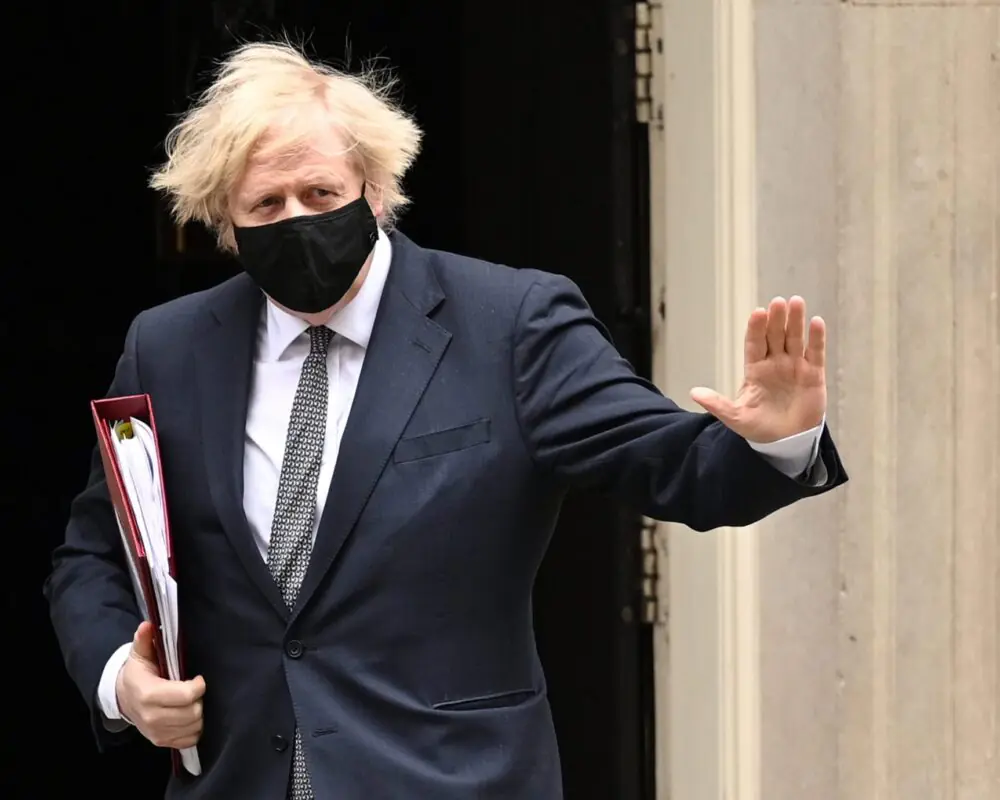
When Baroness Hallett published her Module 2 report of the Covid-19 Inquiry on 20 November, declaring that the government’s response was ‘too little, too late’ and that 23,000 lives could have been saved by locking down one week earlier, I found myself reflecting on the surreal years I spent as Head of Research for the […]
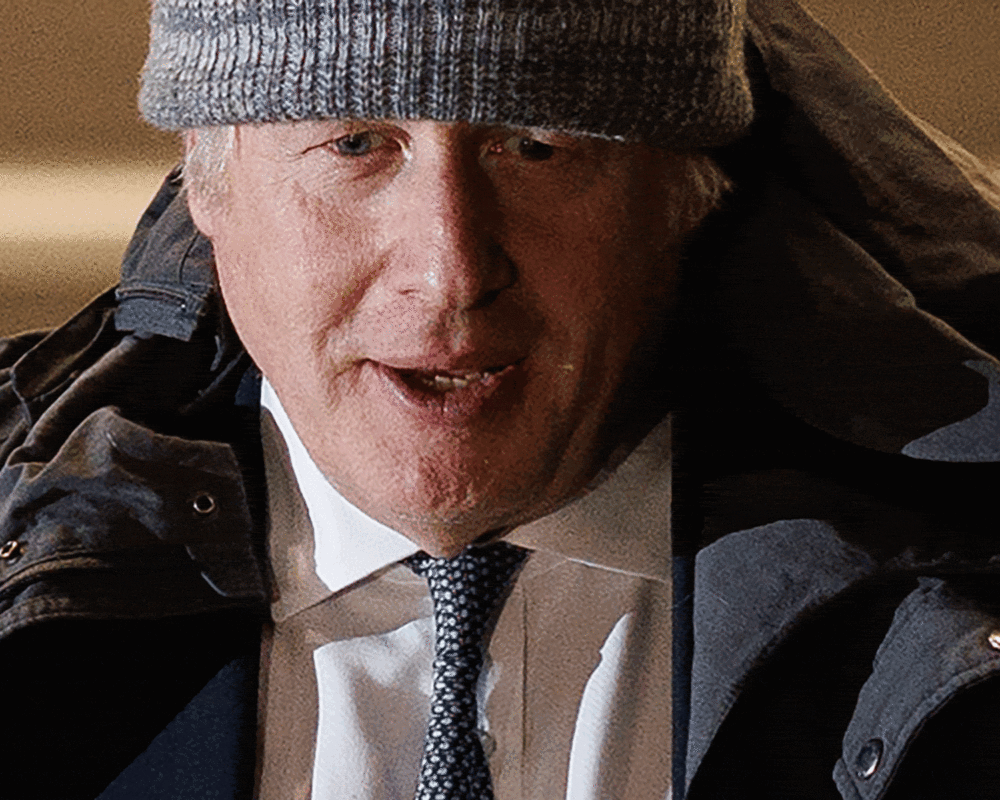
Boris Johnson and women. There has never been a shortage of revelations about the ex-Prime Minister’s relations with the fairer sex, but this week brought another: he didn’t have enough of them. Speaking at the Covid Inquiry, Johnson admitted that ‘the gender balance of my team should have been better,’ and ‘during the pandemic too […]
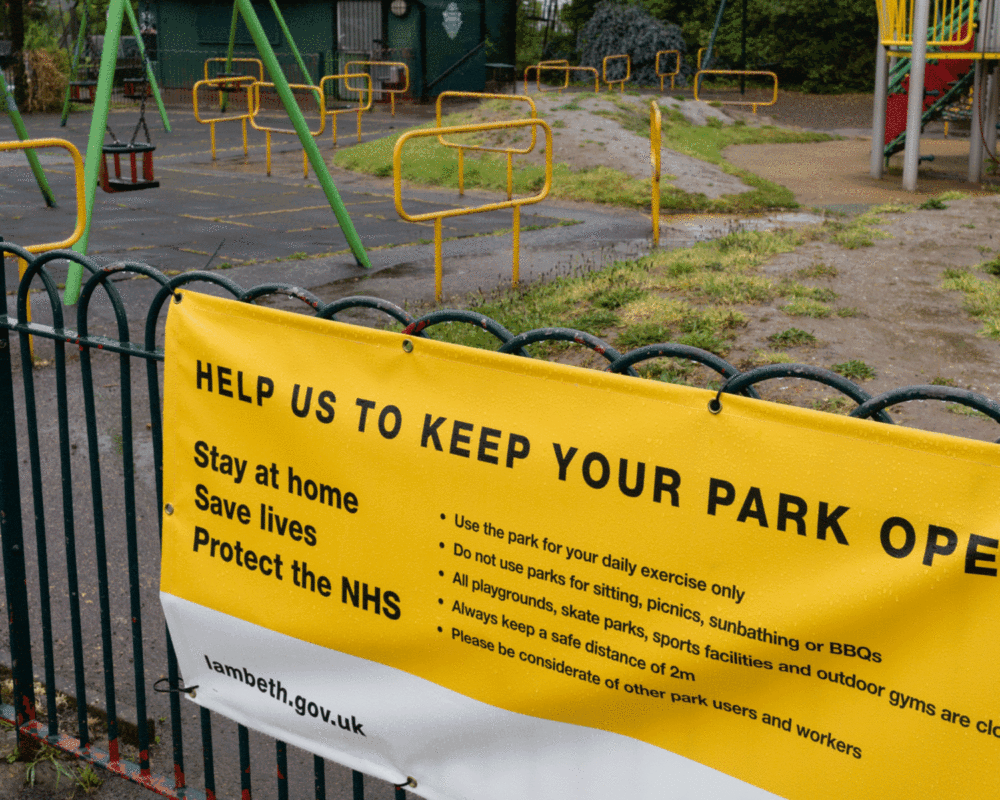
The long-anticipated Covid inquiry opened its first session this week, with much fanfare about WhatsApp messages. As ever with media coverage of serious events, it’s easy to let rather prosaic elements distract from the much bigger questions. For although it may now feel like ancient history, we must not forget that during the pandemic governments […]