Rachel Reeves doesn’t understand young people
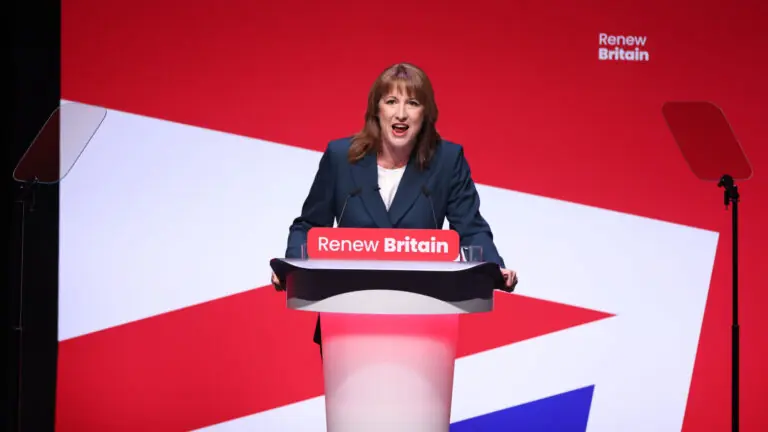
Photo: Dan Kitwood/Getty Images
One can’t help but feel a bit sorry for Labour’s youth cohort. Having been born in the dying days of New Labour and come of age during 14 years of Conservative government, last year’s election victory was the culmination of an adolescence spent leafleting, campaigning and most painfully, waiting. Yet for those who attended the Labour Party Conference, the mood must have seemed more desperate than celebratory.
Between the repeated allegations of racism against Reform UK (despite Labour’s policy on Indefinite Leave to Remain not being that much softer) and the ebbs and flows of Andy Burnham’s leadership challenge, this year’s conference did not project an image of a government overly confident in itself. But among the noise, could there have been something for young people to be cautiously hopeful about?
In her keynote speech, Rachel Reeves announced a new youth employment scheme based on Tony Blair’s New Deal for Young People, launched in 1998. Under the programme, young people who have been out of work or education for 18 months will be provided with guaranteed paid work. If they refuse to take up the jobs offered without a decent excuse, they will risk losing their benefits.
On the surface, this might sound like a good idea. According to the latest figures, one in eight 16- to 24-year-olds are currently not in education, employment or training (NEET) – about 948,000 people. This is a shocking statistic that has rightly prompted the Government to take action. But how effective is the Chancellor’s scheme likely to be?
Currently, the details of the plan are scant. There has been no indication as to when the policy will kick in, what sort of work will be available nor how much it will cost. When it was put to Reeves that the locations of available jobs may not align with the areas in which youth unemployment is highest, the Chancellor evoked Norman Tebbit and responded, ‘People do travel to work every day, don’t they?’ The Financial Times also reports that the jobs guarantee may only reach a small fraction of those counted as NEET. Statistics from the Department of Work and Pensions show that there are only 43,000 young people between 18 and 21 actively seeking employment who have been claiming out-of-work benefits for over 12 months.
There’s a bigger problem: while a top-down scheme to get young people into work might win plaudits from an audience of Labour Party members, it isn’t going to cut it with the employers who have already been punished by Reeves’ harmful meddling in the labour market.
At the last Budget, Employer’s National Insurance was hiked by 1.2% at the same time as the earnings threshold for contributions was lowered from £9,200 a year to £5,000. The NI rise came into force earlier this year, and the damage was noticeable almost immediately – a number of British businesses cannot afford to hire new workers with the confidence they used to. A survey published in August by KPMG and the Recruitment & Employment Confederation showed a downturn in recruitment activity. The report’s index for permanent placements was at 40 in July, barely up from the previous month’s two-year low of 39.1. Any result below 50 shows that recruiters are expecting to see activity drop rather than grow. No wonder, given analysis by the Centre for Policy Studies – CapX’s parent organisation – showed that it will cost business £2,367 more to employ a full-time worker on the minimum wage in 2025 than it did in 2024.
On top of this employment-killing tax, there is the pernicious Employment Rights Bill. Under the terms of the legislation, all workers will have unfair dismissal protection from day one, employers will be liable for any third-party harassment against employees, and Tory legislation on minimum service levels during periods of industrial action will be repealed. Meanwhile, in April, the minimum wage rose to £12.21 per hour from £11.44 – making it even more expensive to hire a junior worker.
In other words, this well-meaning legislation puts employers in a position where young people with the least experience of work will be seen as expensive and potentially disruptive liabilities who are not worth taking risks on.
This isn’t the only way in which the Government is shafting the young. Despite Labour being elected on a pro-housebuilding platform and Steve Reed prancing around Liverpool in a ‘build baby build’ baseball cap, little has come to pass, and the dream of home ownership remains as out of reach for young people today as it was under the Conservatives.
The flagship Planning and Infrastructure Bill, which was going to reform the planning system in such a way that Labour could deliver on their promise of 1.5 million new homes by 2029, has been partly neutered. Rather than taking on the Nimbys who have so successfully blocked the construction of new homes in recent decades, the Government caved into the green lobby and amended its Bill to strengthen the environmental requirements for new developments. This confused approach is already yielding bleak results – between July 9, 2024, and June 15, 2025, an estimated 186,600 net additional homes were delivered in England. This is 113,400 homes short of the annual target of 300,000.
In short, the Government is right to try and improve the lot of Britain’s young people. While misguided, initiatives like the Chancellor’s youth employment guarantee are well-intentioned attempts to move the young away from the indignity of a life on benefits. But they won’t make the blindest bit of difference if the Government continues to overregulate the parts of the economy that, if allowed to operate freely, would not only create the jobs young people need, but make it easier to own a home and start a family further down the line. Perhaps when 2029 comes around, the same young people who spent the weekend in Liverpool might ask themselves if Labour is really the party for them.


The Government is consulting on a requirement for the provision of pay details in job advertisements. This is part of a wider consultation being run by the Office for Equality and Opportunity (OEO) on equal pay and pay discrimination. The remorseless expansion of the scope of equality legislation never slows, driven as it is by […]

The media headlines all tell a consistent story about AI and employment: We’re doomed! ‘Robots may shatter the global economic order within a decade,’ says The Telegraph. ‘A World Without Work’ is coming, The Atlantic predicts. ‘The brave new world of robots and lost jobs’ is upon us, The Washington Post says. Most gloomily, Forbes […]

Schools do not exist in isolation from the economy. The number of young people who are not in employment, education or training (NEET) is, in large part, a function of the economic conditions in which they leave education. When growth is weak, entry-level opportunities are scarce, employers are cautious and the public finances that pay […]