Let’s get rid of the Convention holding Britain back
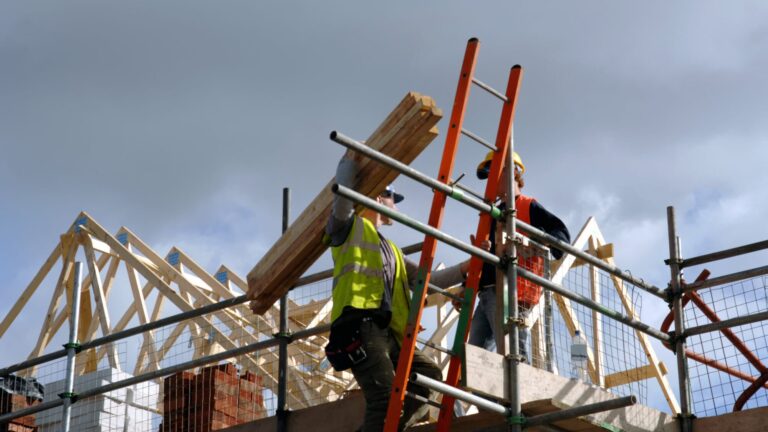
Photo: Getty Images
It is a strange thing to see a second planning bill emerge from the Government in such a short time – but it seems as if it is really happening. This is, as I’ve written before, a good thing. The first bill has been watered down repeatedly and Keir Starmer, correctly, realises it is not going to change the fate of the country (or his party) if he doesn’t shift direction and become much more radical.
The first move has been to appoint a respected Conservative peer – Lord Banner – to write a new planning bill that targets the Aarhus Convention. The Aarhus Convention is little known but has likely cost our country millions of pounds directly, many millions indirectly, caused job losses, hampered construction and done so without even achieving its stated objective of protecting the environment. It is, in many ways, a disaster.
For a quick summary: the Aarhus Convention is a bizarre legal protection given to judicial reviews of large infrastructure projects in Britain. The Convention is an international agreement between multiple nations, ensuring that citizens that want to challenge large infrastructure projects are able to cap their losses at minimal rates. This means that if a private individual launches a case against a large infrastructure project and loses, they have to pay only £5,000 of legal fees. An organisation that loses will only pay £10,000. To put this in perspective, the relatively straightforward judicial review of the Bully XL ban cost £250,000 in legal fees. That is a lot of missing fees. So who pays the remaining fees of these capped amounts? You, the taxpayer.
Again, this is in the event that a case loses. We are ensuring that challenging large projects, on environmental protections grounds, has minimal risk to any individual or organisation. These challenges end up delaying projects, sometimes for many months or years. It is also the case that our bases for judicial review have expanded over the last several decades since the convention was agreed in 1998. This has led to a perfect storm. Organisations can fundraise to launch judicial reviews on spurious grounds, and can do so simply to frustrate, slow or ultimately kill, via a thousand cuts, large projects across the country. They can do this and never win a single case. They can do it and pay minimal loses (and fundraise off of those losses from a dedicated audience). The only people that lose out are you and I (and also, in a way, themselves). We don’t see the jobs, we don’t enjoy the lower energy prices, we don’t see the companies and technologies, medicines or other innovations and inventions that are allowed to bloom from projects. Instead, we kill investment in this country and pay for the privilege.
The Aarhus Convention is a key target for serious, radical reform. It will be seen as a radical intervention. Organisations will fight this tooth and nail, and the Government will face international opposition. There are even questions around the status of Aarhus in light of the Brexit negotiations that guaranteed keeping the bar of environmental protections – at minimum – as the same as they were at the time of leaving.
In these kinds of discussions, it rarely matters if the particular legal instrument actually improves the environment, but just if it has the ‘vibe’ of doing so. Aarhus will certainly have that ‘vibe’ in the view of governments, organisations and anyone that wishes to stop Britain building.
We have long since passed the point of asking ‘do we want a better quality of life in this country?’ The answer is, clearly, yes. The decline experienced across Britain is contributing to the anger, upset and disappointment currently rampant in this country. It is time to change it. It is time to make radical moves. Leaving Aarhus won’t be enough on its own, but as a first target, it is an encouraging one.Let’s see if they are able to do this – or if the legal advice, the Civil Service machine, disgruntled backbenchers and the machinery of vast influential organisations crush the Government to the point it gives in, and the country continues on its stagnant path.


The UK-EU relationship must be viewed through the lens of the battle for the world’s operating system. There are three operating systems in the world. The first is a competition on the merits system where countries are free to engage in regulatory competition but inter-operate on the basis of mutual recognition and equivalence. This historically […]

In the mid-90s, you could save up a deposit for a house in a year; now it takes about a decade. That’s a really meaningful change. That’s a whole stage of your life where 30 years ago you might reasonably have expected to become a homeowner and now that is highly unlikely In a room […]
Even before he became Prime Minister in July, Andy Burnham had talked about the country in institutional, positively mechanical ways. He promised to ‘give Britain the circuit-breaker it needs’, and said that his Number 10 North, part of the Office for the Prime Minister and Cabinet based – where else? – in Manchester, would be […]