Labour’s chaos is holding back Britain’s builders

Photo by Leon Neal - WPA Pool/Getty Images
Today’s S&P UK construction data should set alarm bells ringing in Number 10.
Construction activity across housing, commercial and civil engineering has seen its steepest fall since the pandemic, with new orders nosediving and employment declining for eleven consecutive months.
This is not a natural cooling of the market. It is the predictable consequence of a policy environment that has become more expensive, more uncertain and harder for businesses to navigate. Instead of giving firms the stability to invest, recent decisions have weakened confidence across the construction supply chain at exactly the moment Britain needs it to be firing on all cylinders.
It would be convenient to dismiss this as a temporary slowdown. But if you take a look under the bonnet, underlying problems become clear: a policy environment that has grown more expensive, more unpredictable and far harder to plan around. In the months before the Budget, businesses were left guessing on tax, skills policy and investment rules. That uncertainty now shows up in the figures – weaker orders, falling employment and a supply chain losing confidence fast.
Nowhere is this truer than in plant-hire – the sector the industry body I lead, the CPA, represents.
Our members provide the equipment that enables almost every project in Britain, placing them at the heart of this pressure. They are capital-intensive, asset-heavy and overwhelmingly family-run, with SMEs accounting for 96% of the entire construction sector.
These firms may not attract headlines, but they are indispensable: without them, nothing gets built – not homes, not rail lines, not roads, not public infrastructure. Yet they are being hit hardest by a series of policy choices that make investment more difficult rather than easier.
Two decisions in particular have compounded the problem.
First is the rise in employer National Insurance. At a time when construction employment is already falling, increasing the cost of taking on and retaining staff is a strategic mistake. The wider construction sector needs around 250,000 additional workers simply to meet the infrastructure pipeline, alongside the 161,000 required for Labour’s 1.5 million homes pledge. Making employment more expensive discourages training, slows recruitment and pushes hiring decisions further into the future.
Secondly, uncertainty surrounding the future of Business Property Relief (BPR) in inheritance tax. For family-run firms, BPR is fundamental. Their value sits in machinery, not cash reserves. Weakening or removing BPR would force many to sell essential equipment just to meet a tax bill, undermining continuity and making long-term planning practically impossible. Crucially, this burden falls almost entirely on SMEs; large public PLCs and private equity-backed firms are not exposed in the same way, giving them a competitive edge.
The scale of concern among our members is stark. In a recent CPA survey, 76% said the proposed inheritance tax changes would reduce investment, while 80% fear that passing their business to the next generation would be jeopardised. This is not hypothetical – these are real decisions being deferred now. Fewer machines are being ordered, fewer apprentices hired and fewer upgrades to greener equipment are being made.
This combination of rising costs and tax uncertainty has created a perfect storm. When firms cannot predict future liabilities or trust the stability of the policy environment, they pause. And that hesitation is exactly what the S&P construction data captures: falling output, shrinking order books and a sharp drop in optimism – now at its lowest point since 2022.
There is still time for the Government to reset its relationship with the sector. Providing clarity on BPR, reversing the National Insurance rise and setting out a stable, long-term tax and investment framework would give businesses the confidence they need to start investing again. What the industry needs now is partnership: clear rules, predictable policy and a shared understanding of the scale of Britain’s ambitions.
Our sector wants to invest, wants to hire and wants to deliver the homes and infrastructure Britain urgently needs. But no industry can build on shifting sands. With clarity and stability, construction can once again become a driver of national growth. Without it, Labour’s infrastructure ambitions will continue to drift further from reality.

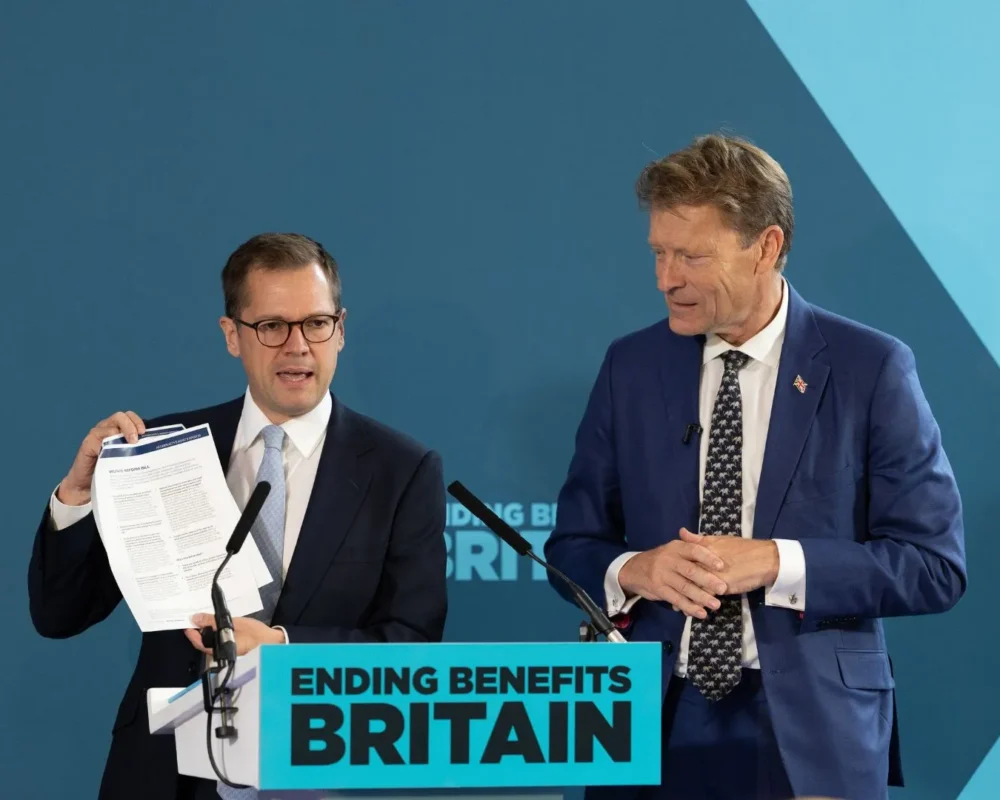
Depending on who you ask, the welfare state is either the only thing left in Britain worth fighting for or a byword for state failure, waste and deceit. A cursory look at the statistics will leave readers under no illusion as to which is the correct interpretation. In the 2025/26 financial year, we are projected […]

Britain and America have spent a decade arguing about Nimbyism as if it were a housing problem. It is much bigger than that: our inability to build, in a broad sense, has grown into a source of geopolitical weakness. The economic argument has been made already. Growth controls add anywhere from 17% to 38% to […]

More than 20 million people across England and Wales are currently under hosepipe bans. This should be no surprise following the driest July on record, with the Met Office provisionally recording just 5.6mm of rain across England, less than half the previous record, set in 1911. But how much of the blame can be laid […]