How to beat Zack Polanski
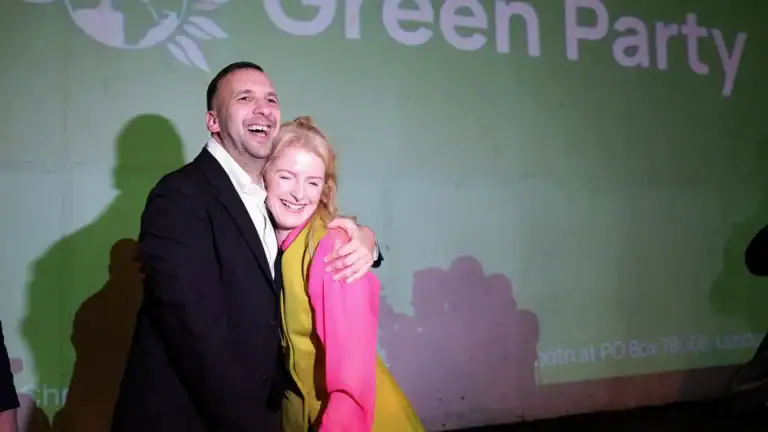
Photo: Ryan Jenkinson/Getty Images
The Green Party’s victory in last week’s Gorton and Denton by-election was a grim indicator of where British politics could be heading. With 40% of the vote, Hannah Spencer won her campaign by stirring the pot of local sectarianism; releasing campaign videos in Urdu and Bengali, accusing the Government of funding ‘genocide’ in Gaza, and – most absurdly – claiming that ‘people like’ the Reform UK candidate Matthew Goodwin caused the Manchester arena bombing by ‘dividing people’.
You’ll notice that none of these strategies have anything to do with the environment. Under Zack Polanski’s leadership, the Greens have shifted from environmentalism to what French conservatives have termed Islamo-gauchisme – a fusion of traditional Leftism with the imported communal grievances of a growing Muslim population. Polanski has branded this the politics of ‘hope’, but of course this menacing ideology of economic self-destruction and social division is nothing of the sort.
This is not a political formula that thrives when a country’s economy is performing well and its citizens are getting along. So it’s no surprise that after years bobbing along on single-digits in the polls, the Greens are now building meaningful electoral momentum across Britain.
Following their success in Gorton and Denton, the Greens are now polling above the Labour Party. You might well gulp, but the spike isn’t a shock – especially among the young. Polling published in January showed that 18- to 24-year-olds (particularly young women) were disproportionately likely to vote Green. After all, almost a quarter (23%) of 18- to 24-year-old women voted Green at the last election, compared to just 6.7% of the general population.
You can’t blame young people for feeling sufficiently disenchanted to vote for a man nicknamed ‘hypnotits’.
The failure of both the Conservatives and now Labour to build enough homes has left young people facing a prohibitively expensive housing market, with many forced to remain in rental accommodation indefinitely as the prospect of homeownership becomes financially implausible. In 2023, 28% of Britons aged 25-34 owned their own home, down from 51% in 1989. This has translated to couples not feeling secure enough to have as many children as they’d like, with one study attributing a 10% rise in house prices to a 1.3% reduction in the birth rate. Our declining birth rate has in turn created a gerontocracy, where the benefits for growing numbers of retirees are paid for by diminishing pools of working-age young people. The cost borne by these young workers to fund the state pension is projected to rise by £80 billion by the 2070s – with over half of this increase being due to the triple lock.
Add to this cauldron an increasingly inaccessible graduate labour market – which is only going to be fuelled further by the Government’s job-killing employment legislation – and it’s remarkable that more young people aren’t giving up on Britain entirely.
If Polanski is to become the vanguard of the young, and increasingly the middle-aged, then it’s worth taking his plan seriously.
The central economic plank of Polanski’s plan to rescue young people is wealth redistribution. This will be achieved with a 1% wealth tax on all assets above £10 million and 2% on assets over £2 billion. Yet wherever they have been tried, wealth taxes have failed to raise any meaningful revenue and forced the wealthy abroad.The Greens might not like it, but almost 30% of income tax receipts come from the top 1% of earners.
His approach to housing would prove similarly effective. Rather than deregulate the planning system to unleash a housebuilding revolution, Polanski would laden developers with all manner of environmental requirements and impose rent controls on landlords. The former has already clogged up our planning system and the latter – like wealth taxes – is a fool’s idea of clever policy that has pushed up rental costs everywhere it has been tried.
Other policies on offer include the legalisation of all drugs – even heroin. Although it would turn our already declining high streets into residential shooting galleries, I suppose it might also numb the pain of having to live under Green Party rule. And of course there’s the conflict in Gaza, which the Greens would apparently solve by reinstating funding for UNRWA (an agency that provided antisemitic textbooks to Palestinian schools) and ending all arms sales to Israel.
The pied piper of national ruin, Polanski is seeking to exploit the desperation of Britain’s young people and lead them down a path of economic and social misery.
There is another way.
This week, the Centre for Policy Studies (CapX’s parent organisation) hosted the leader of the Canadian Conservatives Pierre Poilievre to deliver its Margaret Thatcher lecture. Ultimately scuppered by Donald Trump’s threats to make Canada the US’s 51st state, it looked for a while like Poilievre would become the nation’s prime minister.
While Mark Carney won, Poilievre achieved something extraordinary during his campaign. He – a conservative – managed to galvanise young people in a way that for us often feels impossible. Polling released just before Canada’s general election last year showed support for the Conservatives outpacing the Liberals by 44% to 31.2% among 18- to 34- year-olds.
Starting from first principles, Poilievre laid out a comprehensive plan that would provide his country’s youth with the opportunity to own a home, allow workers to keep more of their earnings, crack down on crime, reduce energy bills and repair the damage caused to the Canadian labour market by mass migration.
No appeals to conflicts happening thousands of miles away, no stoking communal tensions for votes, no economic illiteracy; Poilievre gave young people an honest plan for a brighter future.
Britain’s young people deserve so much better than Polanski and his band of snake-oil salesmen. But the data increasingly shows that if a credible, well-articulated alternative isn’t offered soon, we could lose them entirely. To stop this, the British Right needs to go Canadian.


A century ago you had to be rich to get any kind of choice over your clothes. And if you weren’t in the upper echelons of society you could forget going on a foreign holiday. Today, mass production ensures there is an abundance of clothes to choose from at all budgets, and cheap flights have […]

This week, Nimby Watch is in Bath, where councillors are at loggerheads over the concept of safety. I dislike Bath, and do not think it agrees with me, and yet Bath is to be my home? Aren’t you full of surprises? I didn’t have you down as a fan of Jane Austen, and here you […]

Can you imagine anything worse than a foreign company whose software saved lives, cut NHS waiting lists, put more police on the beat and reduced crime? It’s appalling, isn’t it? No British government or public sector body should have any dealings with such a company. Obviously. Much better to let patients die, cut police jobs […]