Cuba’s communists will reap what they have sown

Photo: YAMIL LAGE / AFP via Getty Images
The Atlantic’s Jeffrey Goldberg asked a dying Fidel Castro in 2010 if Cuba’s economic model was worth exporting to other countries. He replied: ‘The Cuban model doesn’t even work for us any more.’
It has taken a decade and a half for the Cuban regime’s fans to catch up and they are still advocating for the 67-year-old failed Soviet vassal.
Subsidised oil imports from Venezuela and Mexico have ceased. They sustained the economy after it recovered from the post-Soviet economic collapse, chillingly referred to by the Cuban state as the ‘Special Period’. The White House is increasingly confident it will be able to reverse the country’s pro-Russo-Sino tilt either through a deal with the current government, a ‘Cubastroika’ Western takeover of the economy or comprehensive regime change.
Regime poodles continue to populate papers and pixels with economically illiterate attacks on longtime US policy towards the communist country. Pro-regime pieces penned by first-time authors continue to scatter the media. In a Newsweek piece earlier this year, leftist economist Mark Weisbrot accused Trump of ‘delivering lethal violence’ with the oil ‘blockade’ on Cuba, as well as previous unilateral economic sanctions. Regime allies in Moscow and Beijing are of course free to rush over all the oil they want. Russia has finally sent a tanker – unassailed by US forces – and promises to send another.
An article recently published in The Guardian by little-known academic Sara Kozameh points a wimpy hand at ‘Trump-induced’ hardships and claims Cuba’s current crisis results from the first Trump administration’s reversal of the Obama rapprochement policy.
This is nonsensical – Cuba’s economic faults lie entirely with the regime.
The blackouts which started in October 2024 were triggered by chronic neglect of the oil-fired Antonio Guiteras power plant and electricity grid. New research shows that the partial US trade embargo of 1960 onwards, blamed by all leftists for every economic woe in Cuba, actually accounted for less than a tenth of the national income loss since the revolution.
Regime fans have railed against the ‘blockade’ (‘el bloqueo’ to Cubans) long before the latest oil imports stopped. It does not exist. The US is the largest exporter of food to Cuba. 2025 saw the highest ever volume of both imports and exports between the two countries at $17.5 million and $810.8 million respectively. Before the revolution Cuba successfully exported sugar and coffee – it quickly lost the ability to produce either thanks to Castro’s imposition of Soviet economic policy. In 2024-25, the Cuban sugar harvest amounted to a tiny 150,000 tonnes, down from 8m in 1982 and the worst performance since the late 1800s.
The Guardian piece calls the Obama normalisation of 2014-16 a ‘period of economic effervescence and great hope, of young people making plans, ideas flourishing, US tourism surging and private businesses popping up everywhere’. The only ‘businesses’ to ‘pop up’ were in fact those individuals serving tourists. Self-employment was first legalised in 1993, but it wasn’t until 2021 that the regime allowed private micro, small and medium-sized enterprises to legally exist. In 2024, the Cuban government actually moved to further restrict private businesses with new residency and transaction regulations and by handing enterprise authorisations to municipal councils. Approval of MSMEs has now ground to an all-but-complete halt.
Limits on private activity include no person being allowed to own more than one business, hire more than three people or take part in swathes of the economy at all. The regime has nevertheless grown reliant on private activity to give the economy the semblance of a pulse. It will also not blink when choking that same activity to reassert its authority – the same thinking governed the country’s hyperviolent clampdown on the 2021 protests. Cuban President Miguel Díaz-Canel is only now making yelping noises about the need to ‘transform’ the economic model through private enterprise because the economy is lying flat on its face and the weakened regime has ruined the daily lives of its civilians. He may also fear removal from office by UH-60 Black Hawk.
Some prisoners have begun to walk free from the island’s notorious La Lima prison in what the regime calls a ‘humanitarian and sovereign gesture’. Such releases have long been used as a bargaining chip with the US. They are a signal of the regime’s willingness to co-operate.
Since the Biden administration denied, then confirmed, that China had access to signals intelligence facilities in Cuba since at least 2019, research suggests that the CCP has up to four SIGINT sites in the country at its disposal. Russian intelligence ties are obviously much deeper. The Cuban regime has gravely let down its allies by allowing its economic and social conditions to become so restive. When it comes to dealing with the US now, it will reap what it alone has sown.
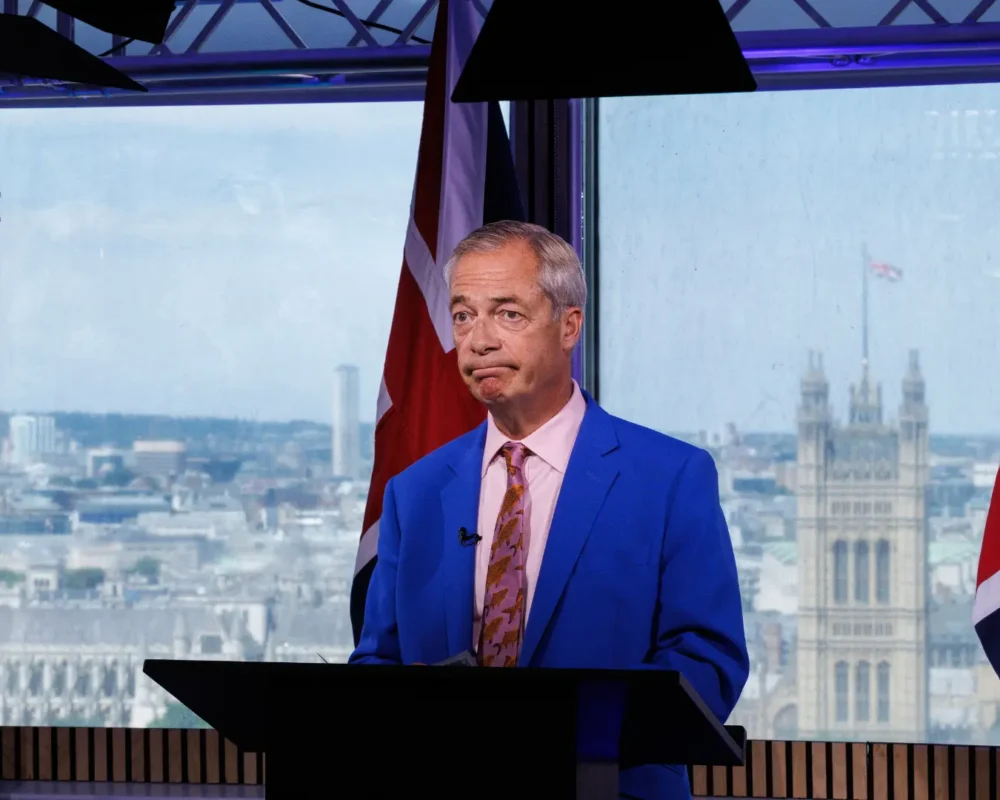
Nigel Farage, the Member of Parliament for Clacton and leader of Reform UK, has resigned, triggering a by-election in the constituency. This follows weeks of speculation regarding an undeclared £5 million gift Farage received before he became an MP, as well as other gifts he allegedly should have declared. Farage intends to stand in the […]
The OBR’s latest Fiscal Risks and Sustainability report, published this week, gives a blunt assessment of the UK’s public finances: we can’t go on like this. If nothing changes, government debt will rise to an unsustainable 300% of GDP in 50 years’ time. How did things get so bad? Well, there’s one big demographic challenge […]

Here it comes again. Whoever Andy Burnham chooses to be his Chancellor of the Exchequer will face the same challenge as all their predecessors since Gordon Brown: producing ‘fiscal rules’ to reassure the City they will be prudent holders of the nation’s credit card. With Britain’s national debt higher than it’s been for decades, and […]