Class war is the enemy of good economics
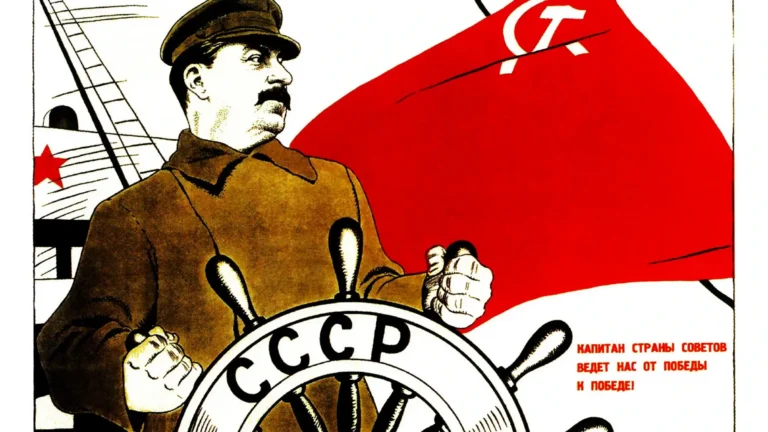
Photo: Universal History Archive/Universal Images Group via Getty Images
One of my favorite Soviet-era jokes is the story of a farmer and a Soviet official. The official asks the farmer: if you had two farms, would you give one to the state? ‘Of course,’ the farmer replies. If you had two tractors, would you give one to the state? ‘Yes,’ he says again. ‘And if you had two cows, would you give one to the state?’ ‘No.’ The official is surprised: ‘why not? The farm and tractor are far more valuable than a cow.’ The farmer replies: ‘Because I actually have two cows.’
Recent polling on public support for wealth taxes brings the joke back to life. An extraordinary 72% support increasing taxes on wealth, based on a Patriotic Millionaires UK survey. YouGov polling reveals that three quarters of Londoners would support a cap on how much rent can be increased each year. It’s easy to be generous with other people’s money, but this mindset reflects a deeper problem.
This was precisely James Buchanan’s concern with democracy. He was no enemy of democracy, but he worried it would become an endless game of rent-seeking, as he wrote in ‘Democracy in Deficit’ with his co-author Gordon Tullock. When politics is no longer about principles but about rent-seeking, when voting becomes a matter of my group getting more of the cake, rather than asking how we can make the cake bigger, we have a problem. But why do politicians support such policies? Buchanan answers: ‘They do so largely because they expect voters to support them when they behave in such a fashion.’ It’s easy to blame the public for not understanding economics or for not being free-marketers, but there is something deeper at work: the problem is the class struggle mindset.
Class struggle, whether in its traditional left-wing form of proletariat versus bourgeoisie, or in its populist version of elites versus the people, rests on one core assumption: society is a conflict between groups. Society becomes a constant struggle in which my tribe must defeat the other. Steven Pinker argues this is the connecting thread between Nazi and Marxist ideologies: ‘For the Nazis the groups were races; for the Marxists they were classes.’ In the class struggle mindset, ‘improvement in the human condition can come only from the victory of one group over the others’.
The first victim of this mindset is good economics. Economics is not a story of class struggle, but of human cooperation – the cooperation of an American software engineer at Apple, chips made in Taiwan, precision parts produced in Japan and Germany, rare earth minerals mined in countries such as the Democratic Republic of Congo and Chile, and final assembly in China or increasingly India. All of this is connected by a miracle called the price mechanism. Trade and exchange rest on a simple but powerful assumption: that we share an interest in cooperation. When you buy your iPhone, you don’t think in terms of class struggle with billionaire shareholders.
Another feature of class struggle politics is its constant need for a central hero: in democratic contexts, populist leaders; in totalitarian ones, a Führer or General Secretary. A hero rises from the people to claim what is theirs – a disruptor who will win the struggle against the wealthy and powerful. This is why class struggle politics is uncomfortable with markets. Markets do not need heroes. The heroes of free markets are ordinary people engaging in exchange.
The economics of class struggle is an economics of protection and limitation. If everything is a war, the state must protect domestic businesses and limit the power of greedy capitalists. Foreign firms are cast as threats to be blocked with subsidies and tariffs. Billionaires are blamed for housing shortages, leading not to more building but to restrictive regulations that paralyse supply. Over time, this mindset transforms a competitive economy into a rent-seeking one. Growth falters when people stop trying to create wealth and instead fight over an imagined ‘fair share’. What begins as a zero-sum mindset can become a zero-sum reality – where the economy stagnates and the only perceived path forward is taking someone else’s slice of the cake.
Class struggle always needs a group that is ‘the enemy’. In a market, the enemy is bad business and bad products. The hero is the one who innovates, creates, takes risks and bears the costs or reaps the rewards. The problem with class struggle politics is that the struggle never ends. There is always an enemy to attack, someone to blame, because the politician never pays the price of their supposed heroism.
If the winners of this year’s Nobel Prize for economics can teach us anything, it is that institutions alone are not enough for growth; we also need a culture of growth. And that culture begins with embracing innovation and recognising that the gains from trade benefit us all – that we all gain from growth, and all suffer from stagnation. Ludwig von Mises, who lived through one of the most extreme expressions of class struggle in Nazi Germany, put it clearly: ‘Society is joint action and cooperation in which each participant sees the other partner’s success as a means for the attainment of his own.’


This morning, John Healey delivered his first major speech as Chancellor. He set out his vision for the economy and, while it was encouraging to hear his determination to drive growth and solve the NEET crisis, all while claiming to be committed to fiscal discipline, it was quite light on detail. However, one specific point […]

The last time I wrote about Reform UK’s annual conference I was doing it as the Deputy Editor of this fine publication. A year on, how much has changed? Greeting you as you enter the conference hall is the familiar fare for the familiar fee. Chicken and chips stands sit next to anti-Labour propaganda, accompanied […]

The Stanford Encyclopedia of Philosophy is not a publication most would be familiar with. It is meant as a repository of overviews of big topics in philosophy broadly defined, inclusive of political theory. As such, entries added to it are unlikely to generate strong responses by the experts deeply familiar with each individual entry. Every […]