Daniel Mahoney

Daniel Mahoney is an economist at Handelsbanken and the former Head of Economic Research at the Centre for Policy Studies.

Articles

Ideas

The cost of nationalisation

The Labour Party has put nationalisation at the heart of its economic strategy. It has promised to take some or all of the energy, water and rail sectors back into government ownership, as well as Royal Mail and an unknown number of Private Finance Initiative (PFI) contracts. This is by no means the limit of […]

Economics

Can a new UK infrastructure bank achieve net zero?

The creation of a UK Infrastructure Bank will form a core component of the Government’s strategy to level up and decarbonise the UK economy. As finance from the European Investment Bank (EIB) to UK projects declines, the UK Infrastructure Bank will attempt to catalyse investment into new infrastructure by co-investing with other investors as well as offering guarantees, debt and equity products. The Bank will […]

Politics

Will ‘levelling up’ mean London levelling down?

“The economic emergency has only just begun” proclaimed the Chancellor at last week’s Spending Review. And the figures look very grim indeed: borrowing will total nearly £400bn this year, with projections suggesting that Britain’s debt pile will grow by north of £100bn a year for the foreseeable future. Difficult choices on spending lie ahead. Indeed, […]

Policy

The water companies tussle with Ofwat highlights the strength of our regulation

The general election result removed any immediate prospect of re-nationalising Britain’s privatised utility industries. This came as a relief to investors – many of whom are major domestic and international pension funds – who were worried about the value of their assets collapsing following a potential re-nationalisation below market value. The much more significant development […]

Economics

How private capital can help realise the UK’s infrastructure ambitions

The March 2020 Budget has now been all but forgotten. In that Budget, delivered in what now seems like a completely different era, Rishi Sunak announced a transformational set of capital expenditure plans, pledging a whopping £640bn of gross public capital investment in economic and social infrastructure across the UK by 2024-25. But a lot has happened […]

Transport

London has a huge transport funding gap – it needs the powers to close it

Transport for London’s (TfL’s) collapsing revenues from fares and other sources led to a widely publicised bailout. This agreement is, of course, merely a sticking plaster and policymakers will now rightly be focused on shoring up TfL’s short-term financial position. But there is also a longer-term funding challenge that will need to be tackled in […]

Transport

‘Levelling up’ doesn’t mean neglecting London’s transport needs

Tackling regional inequality across the UK will be a central theme in this week’s Budget. The Conservative Party’s 2019 manifesto commits the Government to “invest thoughtfully and responsibly in infrastructure right across our country in order to increase productivity and wages” and to do so “prudently and strategically to level up every part of the […]

Economics

Austerity worked – but that doesn’t mean we have money to spend

Nick Timothy today called on Philip Hammond to make a dramatic volte-face at next week’s Spring Statement. According to the Prime Minister’s former aide, the Chancellor should declare that “austerity, Mr Speaker, is no more”. Of course, this growing clamour for an end to fiscal restraint has come on the back of news that the UK is […]

Economics

The flawed logic of renationalising Royal Mail

Compared with Labour’s plans to nationalise parts of the energy and water industries, bringing Royal Mail back into government ownership is comparatively small cheese. The market capitalisation of Royal Mail is around £4.5 billion whereas, for example, the upfront cost of nationalising the water industry could be in excess of £86 billion. However, the rationale […]

Economics

Nationalisation is not the answer to the water industry’s woes

The UK’s water industry has earned a pretty bad reputation in recent years. There are, for example, some incidences of water companies paying out high dividends while increasing borrowing. Does the behaviour of some water companies merit nationalisation? Put simply: no. Ofwat, the regulator for the industry, already has the ability to scrutinise the practices […]

Economics

Nationalisation won’t fix Britain’s broken energy market

Following on from the liberalisation in the 1980s, Britain’s energy system is operated by private companies. Responsibility for energy networks lies with National Grid and a series of privately-run electricity and gas distribution networks. Private companies also handle the generation of energy and retail services to customers. Jeremy Corbyn plans to change all of this. […]

Economics

The eye-watering cost of Labour’s nationalisation plans

Jeremy Corbyn and John McDonnell fought the last election on a promise to implement a mass programme of nationalisation. And that very much remains their plan. The energy, water, rail and mail sectors, as well as some PFI deals, will be first on the list of areas that Labour would seek to bring back into […]

Policy

Hammond is feeling the productivity pressure

We all know that UK productivity has been the big disappointment of the decade. Hourly productivity is now a staggering 20 per cent below its pre-crisis trend, having effectively flat-lined since 2011. Inevitably, there have been consequences for UK workers. Stagnant productivity growth has squeezed living standards and people are feeling the pinch. There is, […]

Technology

Ignore Corbyn: we need more robots

For the Labour Party, robots are the new class enemy. According to media reports, Jeremy Corbyn has said that he wants companies that profit from replacing humans with robots to pay more tax. Another of his ideas is to put ownership of robots in the hands of employees. Paranoia about robots is nothing new. The […]

Technology

Don’t gamble with Britain’s energy security

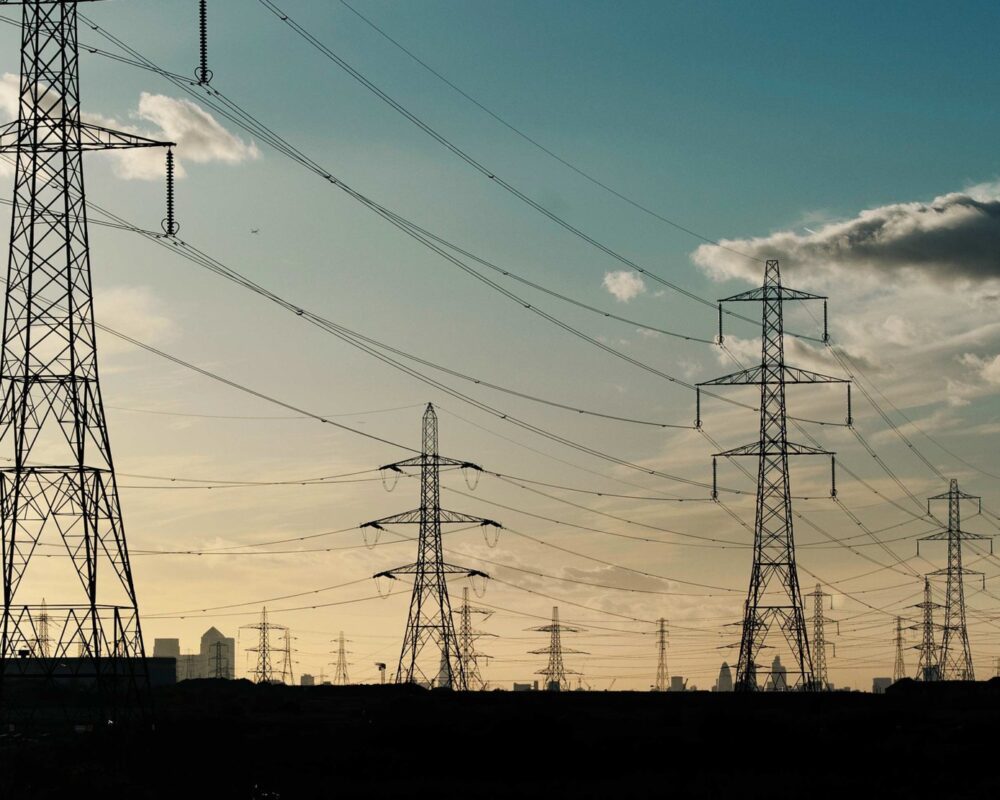
The UK’s electricity and energy policy is at a critical juncture. EU emissions legislation is leading to the mass closure of coal- and oil-fired power stations; a strategy to replace the loss of reliable electricity generation is urgently needed. Earlier this decade, the plan set out by the Government was eminently sensible. A roll out […]

Policy

Is Nick Clegg to blame for Jeremy Corbyn’s success?

The Conservatives’ woeful performance among the under 45s in this year’s election caused panic in Ministers. The rapid-response proposals then set out at Party conference in an attempt to woo the younger voters back included measures ranging from mere tinkering to the seriously ill-advised. The tweaks to tuition fees, for example, will make only marginal […]

Politics

Why does Corbyn want to take from the poor to subsidise the rich?

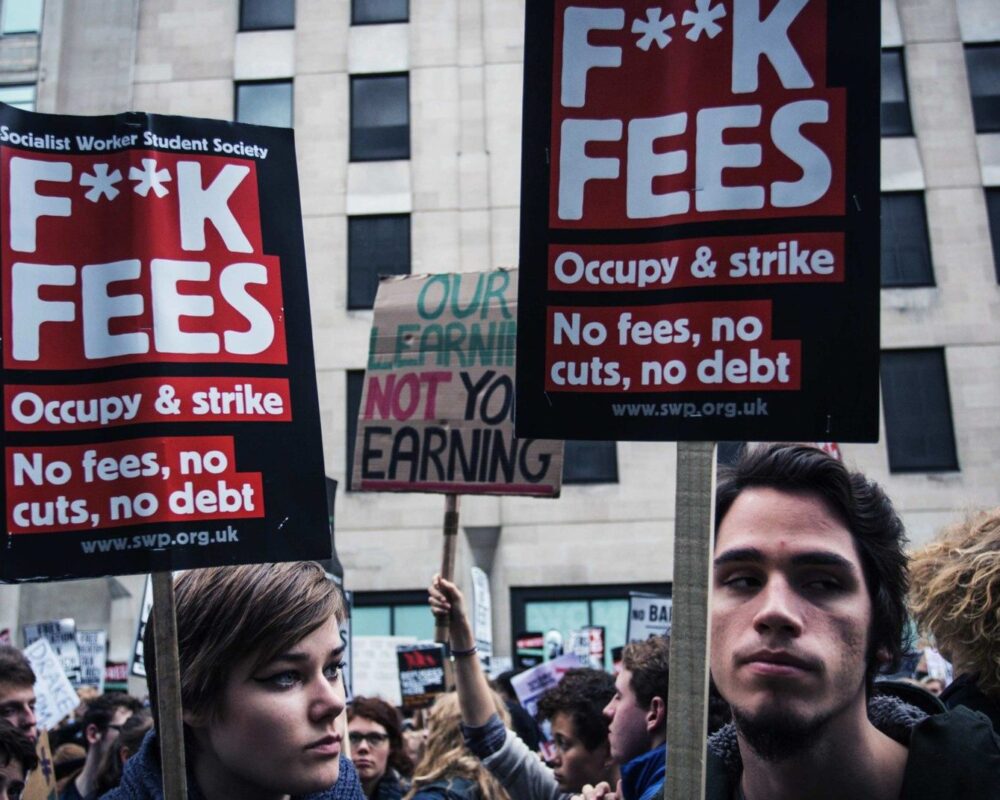
The narrative that it is only a matter of time before student tuition fees are abolished is beginning to take hold. Once the preserve of the Radical Left, it is a view that is becoming increasingly mainstream. The arch Blairite Andrew Adonis recently said that “fees have now become so politically diseased, they should be abolished entirely”. And […]

Europe

The EU cannot afford for the Brexit negotiations to fail

A lot has changed since the snap general election was announced on April 17th. While the Conservative Party started the campaign with a lead of more than 20 points over Labour, some opinion polls now have them with as little as a three percentage point edge. A landslide victory now looks far from certain, which will be significant […]

Ideas

Selection by ability beats selection by house price

“Comprehensive schools have largely replaced selection by ability with selection by class and house price.” These were the words of the Labour education reformer Andrew Adonis in 1998. And two decades later, selection by house price remains just as prevalent within the UK’s education system, if not more so. A recent study by Teach First suggested […]

Economics

How Hammond is keeping Britain open for business

One of the key planks of the Coalition’s competitiveness agenda was corporation tax. Although their fiscal consolidation plan involved some tax rises – particularly on VAT – the headline rate of corporation tax was cut dramatically from 28 per cent to 20 per cent. Traditional economic models imply that a fall in corporation tax will reduce […]