The Price Mechanism
Are you ready for the future of crime fighting?
Flotillas of drones, fleets of Tesla Cybertrucks and ultra-modern tech are being used by the Las Vegas Police Department
4 June 2026
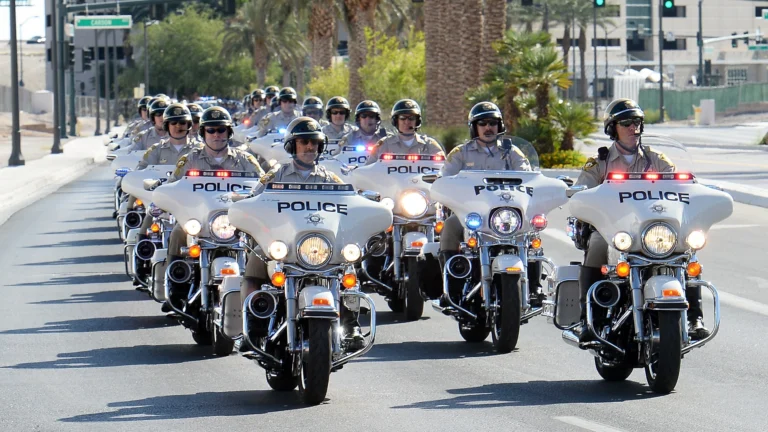
Ethan Miller/Getty Images
Flotillas of drones, fleets of Tesla Cybertrucks and ultra-modern tech are being used by the Las Vegas Police Department
In that bonkers novel, ‘Fear and Loathing in Las Vegas’, Hunter S. Thompson has a great line (well, in some ways, he has several) about crime in America: ‘In a closed society where everybody’s guilty, the only crime is getting caught. In a world of thieves, the only final sin is stupidity.’
But not even one of Thompson’s drug-induced hallucinations could have predicted the actions being taken in Las Vegas today to ensure that criminals are getting caught. Flotillas of drones, fleets of Tesla Cybertrucks and ultra-modern tech are being used by the Las Vegas Police Department in a bid to make Sin City the safest place in America. This has also made Vegas the test bed for a suite of technologies that are transforming both policing – and the debate around it – across America, and soon the world.
The Vegas transformation has been spearheaded by Ben Horowitz, venture capitalist and one half of venture juggernaut a16z. He and his wife Felicia (whose upbringing featured multiple murders and is thus an inspiration for this push) have donated over $7 million of their own money to LVMPD. These donations have bought products that are funded and supported by Horowitz’s fund, so a cynic might question the philanthropic nature of these donations.
Flotillas of drones, fleets of cyber trucks and ultra-modern tech are being used by the Las Vegas Police Department
Regardless, the results have been incredible. Reported violent crime was down 4.3% and property crime down 9.4% year on year, with officer-involved shootings dropping from 17 in 2024 to just seven in 2025. Murders dropped by as much as 28% from 2024 to 2025. How?
The centrepiece is the ‘Drone as First Responder’ programme built on the Skydio X10 drone. There were 10,000 of these drone flights in 2025, more than any other US law enforcement agency. LVMPD plan to double that in 2026, run off a fleet of several dozen drones and a network of 13 rooftop ‘skyport’ launch pads around the city. There is something undeniably cyberpunk about police drones launching from atop Caesar’s Palace, or swooping through the spray of the Bellagio’s water fountains.
Allied to the fleet of literal Tesla Cybertrucks that were donated for police officers to use to try to keep up with the drones, and bleeding-edge number plate recognition technology, gunshot detection and more, Sin City is seeking absolution.
This all comes as other American cities are questioning the use of such technology altogether. In ‘The Big Sleep’, Raymond Chandler’s private detective, Philip Marlowe, notes somewhere in LA ‘seemed like a nice neighbourhood to have bad habits in’. These technologies are already going well beyond the hunch of a hard-boiled PI, and some politicians don’t like the conclusions that the data present.
The city council of Cambridge, Massachusetts, home to Harvard and MIT, recently voted to shut off and dismantle ShotSpotter, a system for detecting gunshots in the city. This was despite the pleas of Cambridge’s top police officer, and the police union, that it was instrumental in fighting crime and saving lives.
The reason? That it might help the anti-immigration ICE raids and that it funnelled too much police activity into ethnic minority neighbourhoods. Something similar happened in Chicago, a city with an astonishingly high homicide rate given its wealth. Mayor Brandon Johnson similarly turned off crime detecting technology, going against his own city council.
In all of these cases, civil liberties are brought into the argument, with accusations of spying and infringements of privacy claimed against all of the technological solutions to crime fighting cited. These are not trivial concerns, and the increasing politicisation of crime stats will make it harder to work out the honest cost benefit trade-offs of infringing liberty in order to keep people safe. Scarier still for civil liberties will be the technologies that are being developed in China and elsewhere that will make Minority Report closer to reality.
The combination of AI software inference and hardware inputs from scanners, sensors and drones will soon provide a live picture of crime across a city. That may induce fear and loathing from campaigners, but for the victims of crime, these technologies may prove literally the difference between life and death, in Sin City, or in a town near you.
David Lammy didn’t cover himself in glory this week in Parliament. Our Lord Chancellor chortled and guffawed while his shadow Robert Jenrick tried to hold him to account for the release in error of a registered child sex offender from HMP Chelmsford whose crime sparked national protests. The shelf life of ‘but the Tories’ as […]
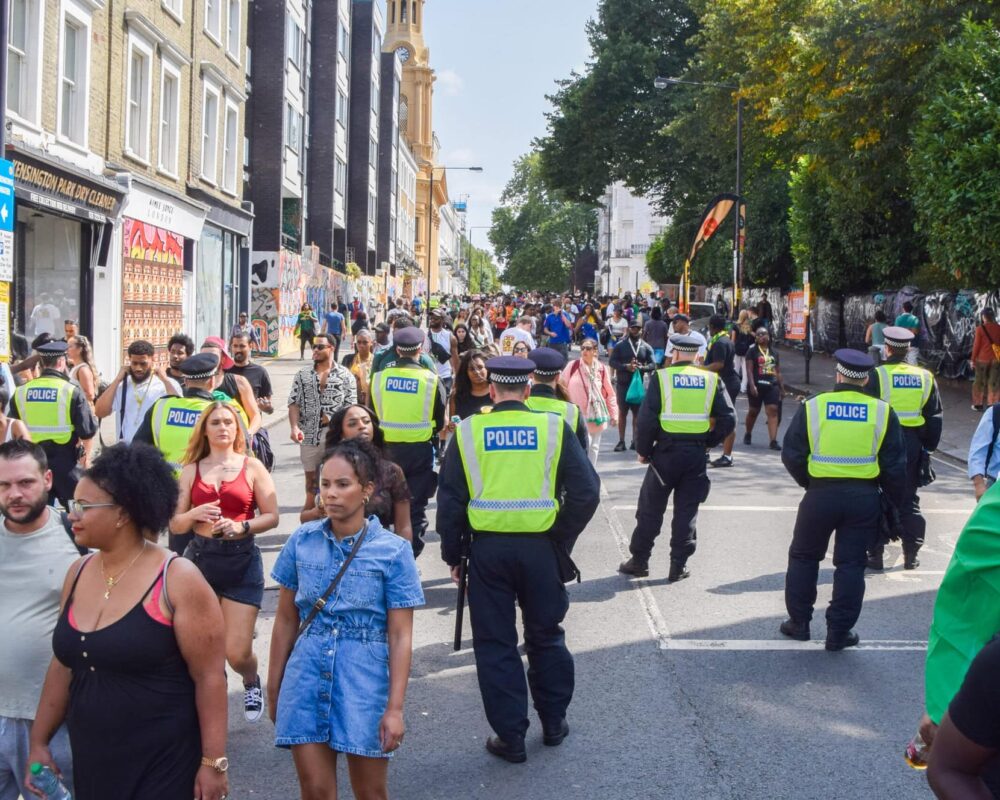
The figures are in. At this year’s Notting Hill Carnival, a total of 334 arrests were made by the Metropolitan Police. Up from the previous year’s 275 arrests, this included dozens for an assault on an emergency worker and possession of an offensive weapon. Along with the 50 police officers injured, there were eight stabbings, with […]