

The eventual economic consequences of a Brexit deal seem to be more important to voters than the ability to control immigration. New polling released by the National Centre for Social Research, led by the influential pollster John Curtice, shows a softening of public attitudes to an eventual trade-off between the free flow of British goods and limits on EU migrants.
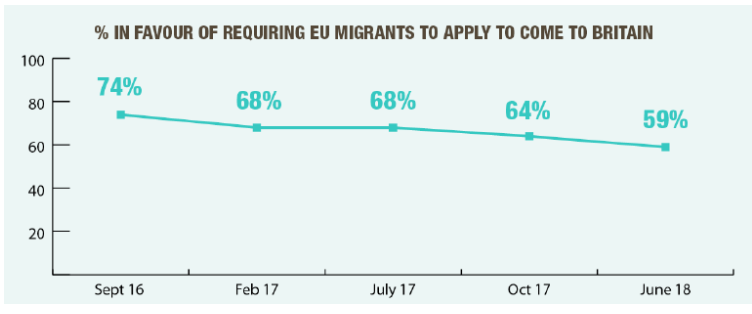
The percentage of voters who believe that EU migrants should apply to live in the UK has seen a marked fall from 74 per cent in September 2016 to 59 per cent as of June this year. And the electorate still overwhelmingly supports continued free trade with the EU, with 86 per cent of respondents in favour.
Despite the fact that “controlling Britain’s borders” remains one of the government’s red lines in the Brexit negotiations, 60 per cent of respondents now agree with the statement that Britain should allow people from the EU to come here freely to live and work in return for allowing British firms to sell goods and services freely in the EU.
The figures also suggest that support for Brexit has become more aligned with expectations about its economic consequences. In September 2016, 69 per cent of leave voters who thought that the economy would be worse off after Brexit would still have voted to leave. However, this has now fallen to just 48 per cent. This may explain why the overall Leave vote has begun to slowly erode. Now only 81 per cent of Leave voters say they would vote the same way now, in contrast to 90 per cent of Remain voters.
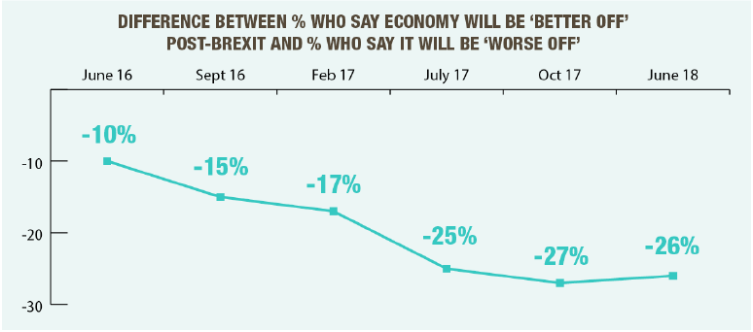
These statistics indicate that British voters may be more willing to compromise on immigration in a deal with the EU in order to protect the British economy while, in the event of a second referendum, pessimism about the economic outcomes of Brexit could tip the balance in favour of a vote to Remain.