
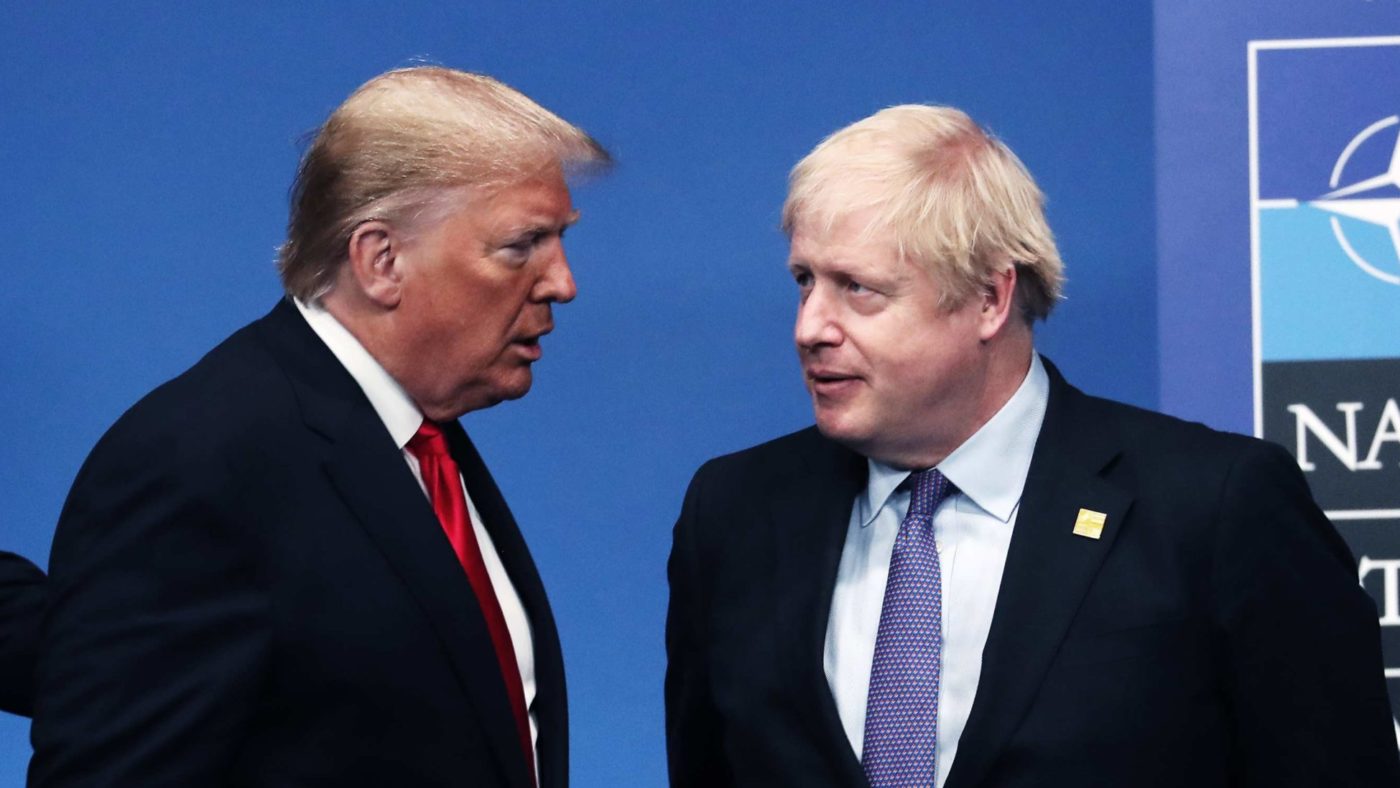
As the UK prepares to leave the EU on January 31st, it must make some grown-up decisions about how to handle its various global relationships, including the all-important transatlantic relationship. We must move beyond the simplistic view that in order to have that grown-up relationship, we must do whatever the Americans want us to do. At the same time, not every American request is an expression of Trump’s America First doctrine, or an unreasonable application of their power.
Instead we must learn to distinguish between legitimate US requests that are actually aligned with global best practice, and global learning, and those that are mere expressions of power between partners. If we look at some of the key issues that have come up in the past few months, we can see how to make this distinction.
Huawei
This is the most pressing issue because decisions are going to be made imminently. Here there are two concerns. One is a commercial one based on the market distortions in the Chinese market and the government privileges and benefits that Huawei receives, to say nothing of its legacy violations of intellectual property rights that have enabled it to have much lower costs than its rivals.
The second, and more important, point is the security risk the company poses. The Five Eyes have warned the UK government about this and shared intelligence briefings. The Japanese are equally concerned about the impact that this will have on the national security of the UK, and intelligence sharing in the future. The British government ignores these warnings at their peril.
One of the big potential benefits of a UK-US FTA would be the defence chapter, especially with respect to the potential exemptions for UK defence firms from some of the more onerous US import and export control requirements, as well as the process for review of foreign acquisitions. But if we have Chinese companies involved in the UK supply chain it is unlikely that any of these concessions would be forthcoming. Security cooperation, and intelligence sharing would also come to a halt. The ability to develop a genuine transatlantic (and wider Five Eyes) defence market would be curtailed, or would go ahead without us.
Before December’s election, the Government had been at best naïve about the interplay between Chinese companies and the Chinese state. They will have to change approach if they are going to deal with reasonable requests from both the Americans and other allies.
Agriculture
US asks in the area of agriculture, both in terms of tariff liberalisation, and sanitary and phytosanitary (SPS) regulations, are consistent with the global norm. If anything it is the EU that is becoming increasingly isolated in the WTO as it embraces ever more anti-competitive and, frankly, protectionist SPS rules. If the UK were to accede to American requests here, we would simply be aligning the UK with the rest of the world outside the EU.
Data
Data is another area where US requests are in line with the developing global consensus. The EU has taken a different path with its infamous General Data Protection Regulation (GDPR). GDPR represents a disturbing EU trend which is the export of its regulation, in the hope that firms will simply apply the tighter, more restrictive EU standards, and these will then become the global norm (the so-called Brussels effect).
Here the US prioritisation of data flow is crucial. Consumers will have to choose whether they want a world where data flows so that big datasets can be used to develop new applications that benefit them, or whether data restrictions which will limit these innovations and deprive them of valuable applications. We will need to rely on concepts like adequacy or equivalence of regulation at a global level, preferably around globally agreed standards, as opposed to one regulatory power imposing a very restrictive approach on the rest of the world.
The US is also rightly concerned at the impact of the proposed UK Digital Services Tax on their high-tech firms. But we should be equally concerned about the impact of a tax on revenues applied when a firm becomes a certain size on the incentives for innovation. When developed countries adopt these kinds of policies, many developing countries follow suit creating a thicket of taxes that will stifle global innovation.
Instead, the UK as a creative, advanced tech hub should be at the forefront of coming up with policies that stimulate innovation and create the kind of entrepreneurial environment where new entrants and companies in the process of scaling up do not think that success will be rewarded with extra taxes on their revenues. If the concern is that people’s data is not being properly valued, data valuation would be a much better place to start than taxation.
Harry Dunn
The US has said it will not extradite Anne Sacoolas, the American who allegedly killed British teenager Harry Dunn, to the UK to face trial. This American response to a lawful UK extradition request is markedly different from the other categories listed above. The UK should stand firm on this issue, despite American threats.
The world needs a mature and responsible partnership between the UK and US. There are legitimate US concerns with the EU’s regulatory system, particularly regarding the tech sector. They have legitimate concerns too about Chinese market distortions and the role of the Chinese state. While the UK should always robustly defend its own interests, we would be foolish to ignore these concerns or underplay them.
Click here to subscribe to our daily briefing – the best pieces from CapX and across the web.
CapX depends on the generosity of its readers. If you value what we do, please consider making a donation.